Neoclassical Rooms and Canova Collection
Ballroom
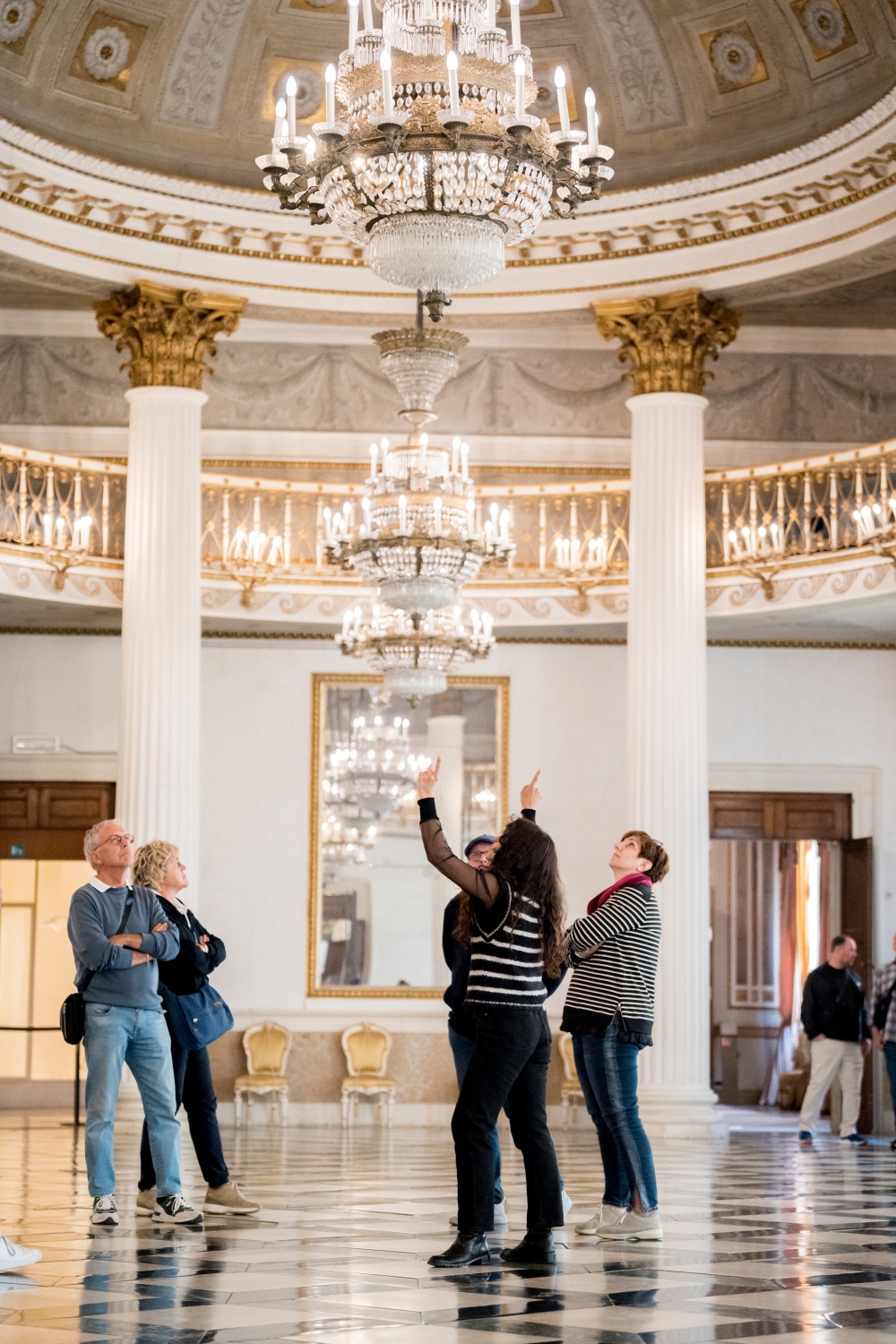
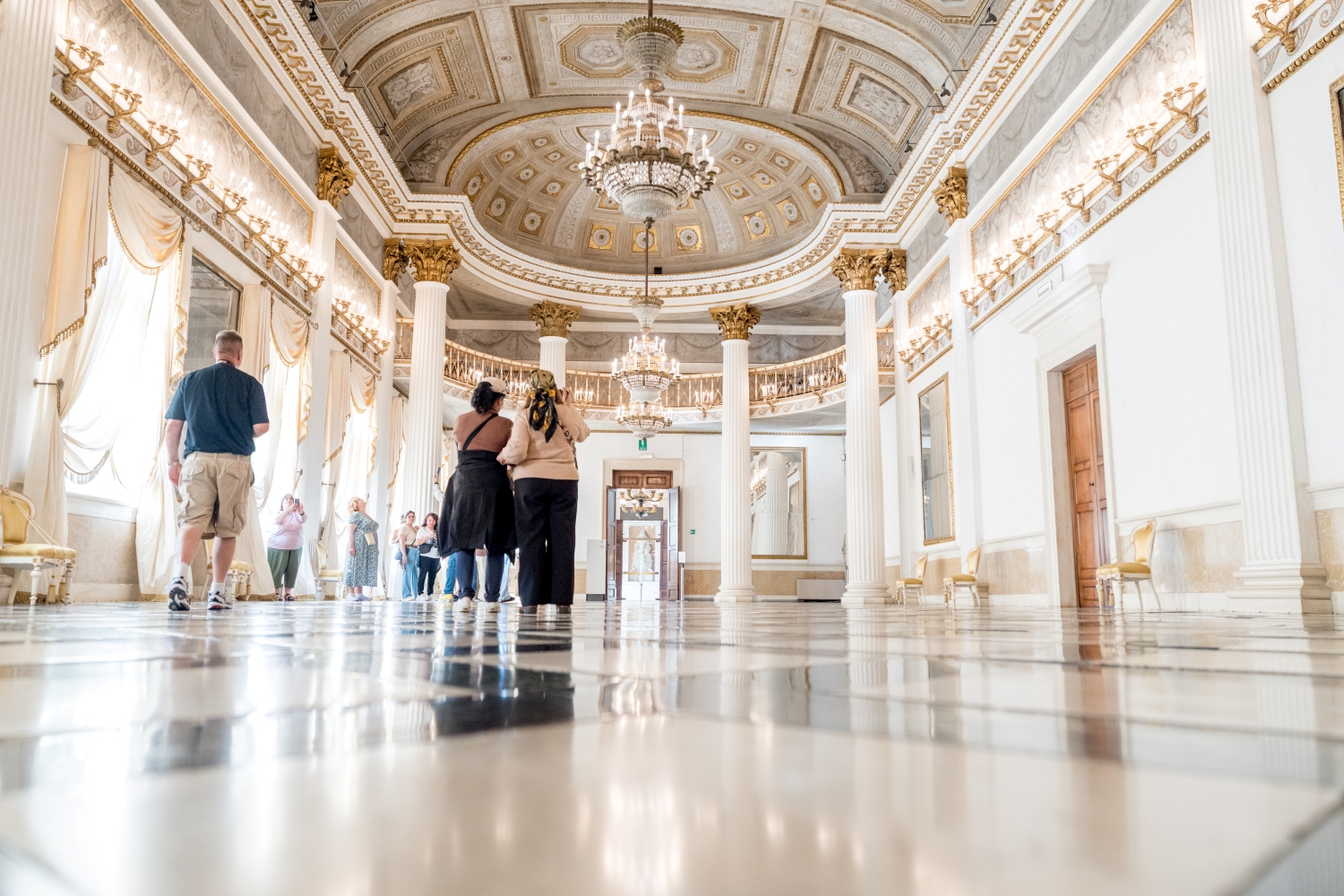
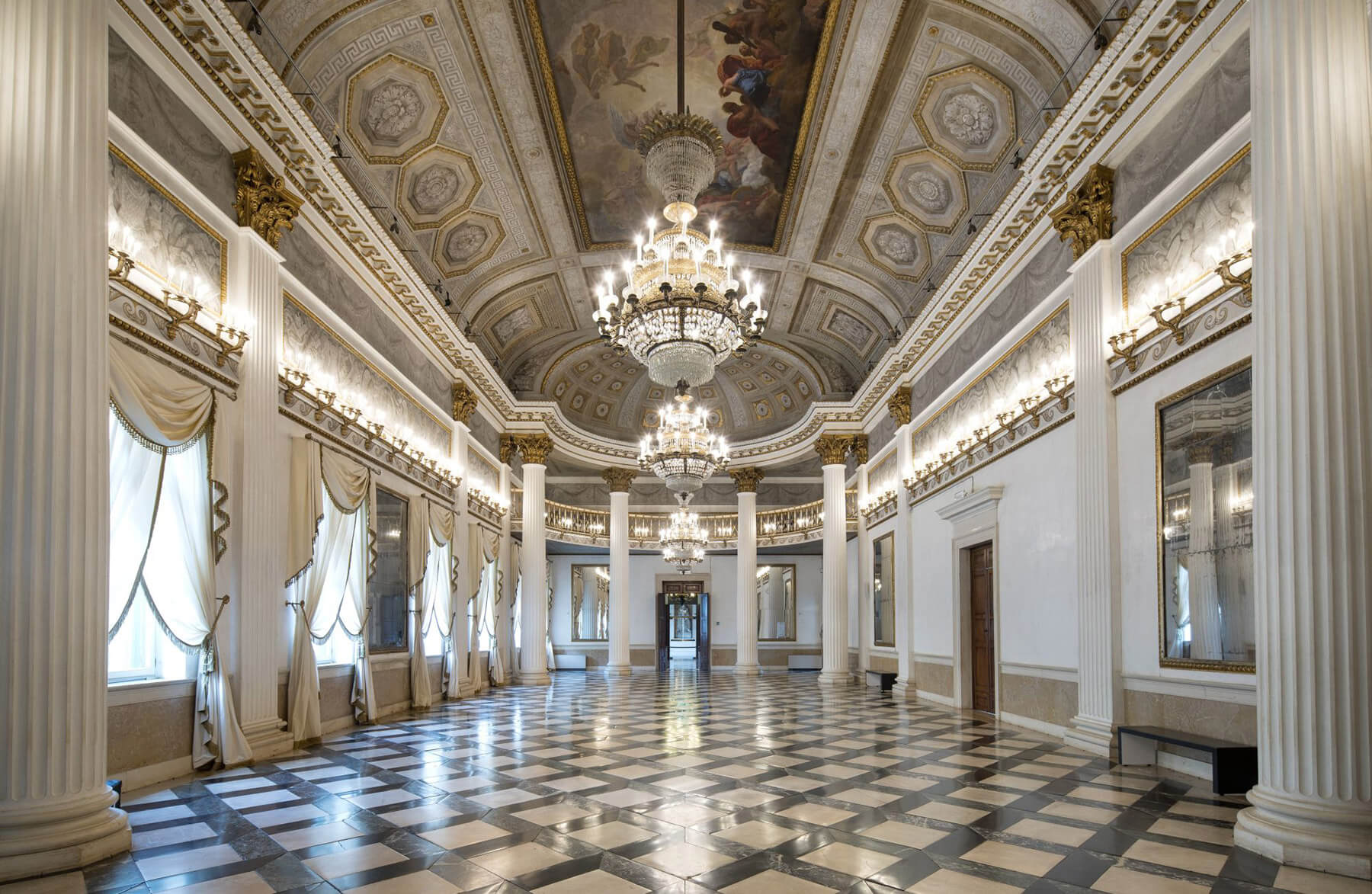
This sumptuous and opulent ballroom is unique in the palace for the refinement of its Empire-style decor. Lorenzo Santi began the works on the design in 1822, and Giuseppe Borsato completed the decoration in 1838. At both ends, the room is bounded by loggias intended to house the orchestra; above the gilded Corinthian capitals of these fluted columns in polished stucco are two small apses that make the upper area of the ballroom into an oval. The centre of the ceiling is frescoed with Peace, surrounded by the Virtues and the Geni of Olympus. Painted by Odorico Politi, the work is a clear reference to the restoration of the Hapsburgs after the Napoleon period.
Canova, from the drawing to the model: from an idea to the form in space
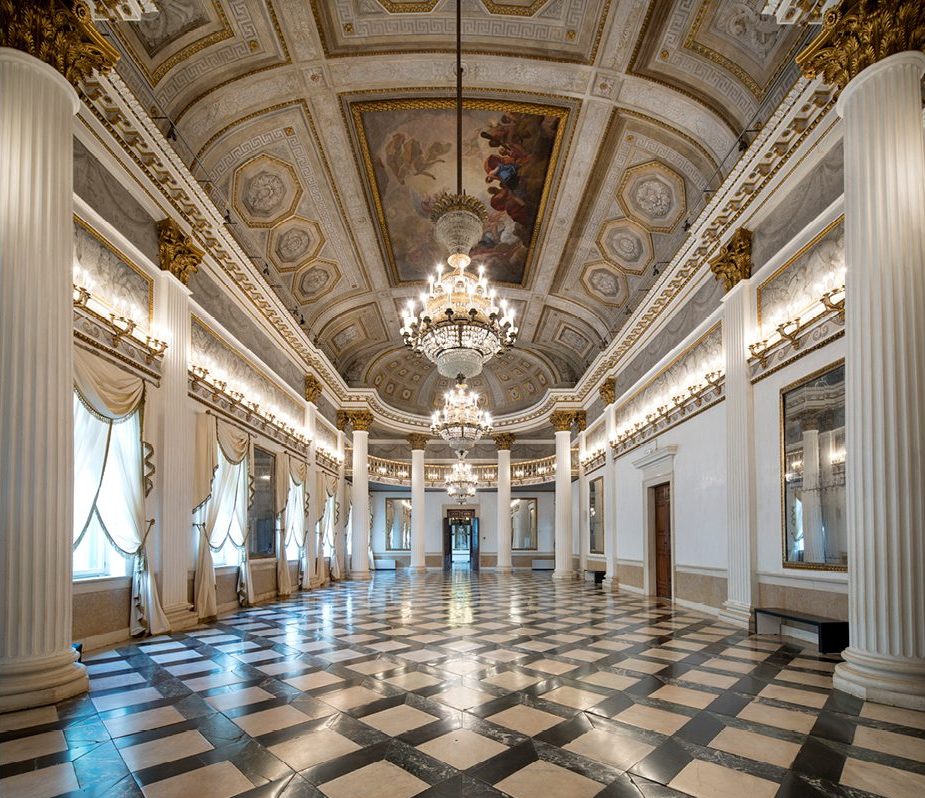
The museum houses a large nucleus of autograph drawings from the collections of illustrious figures that knew Canova (Leopoldo Cicognara, Bartolomeo Gamba, Francesco Aglietti etc.). Part of the first stage of his creative process, the drawings used two techniques that the sculptor chose depending on how satisfied he was with the ‘idea’: in pencil whilst studying the subject and composition and in ink with sure, subtle strokes for subjects that were mature in their gesture.
In the sculptor’s hands malleable materials such as wax and clay (either fired or left raw) either take on a concrete shape or substantiate the drawing in space, in particular in the case of articulate groups of figures.
Canova, his beginnings
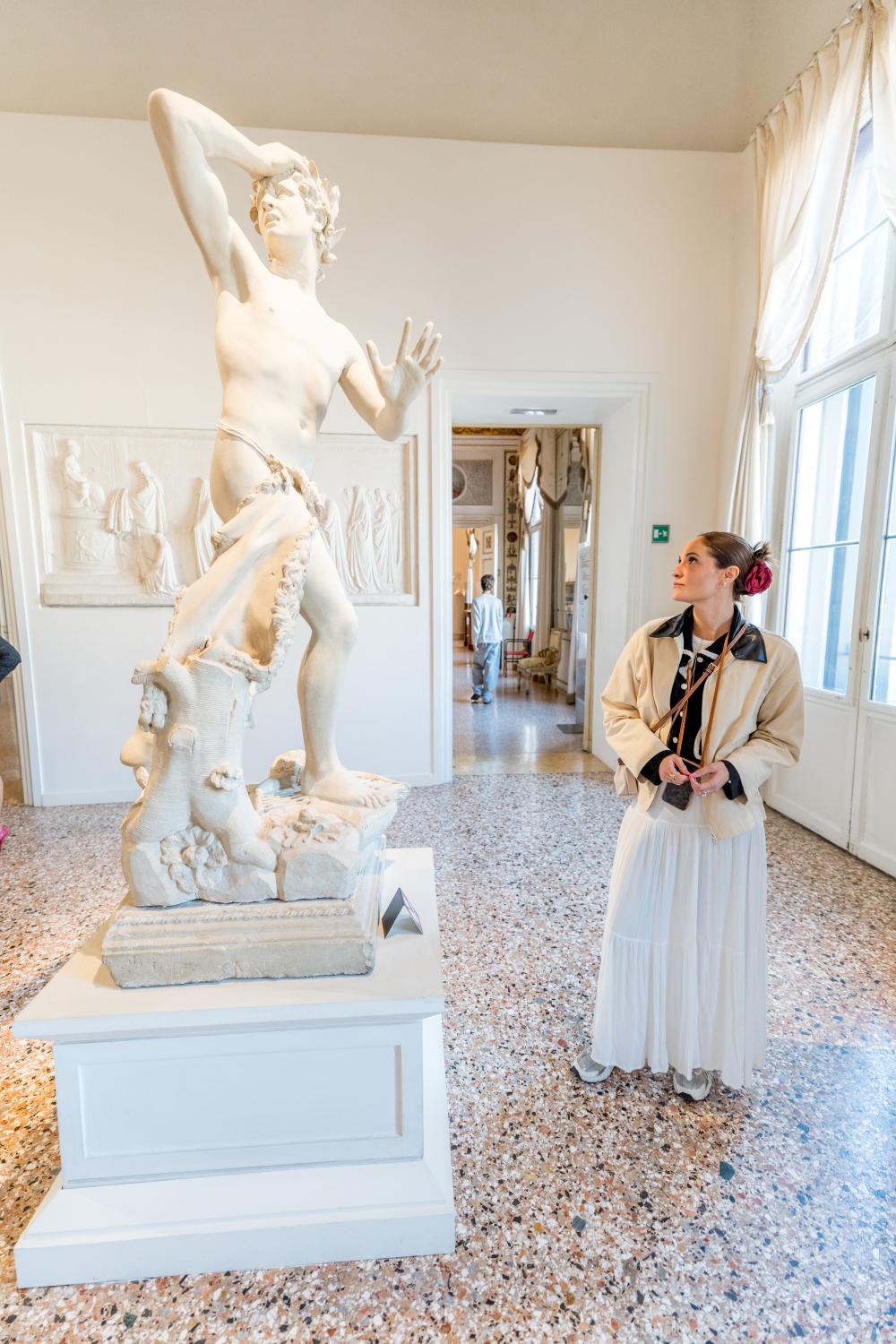
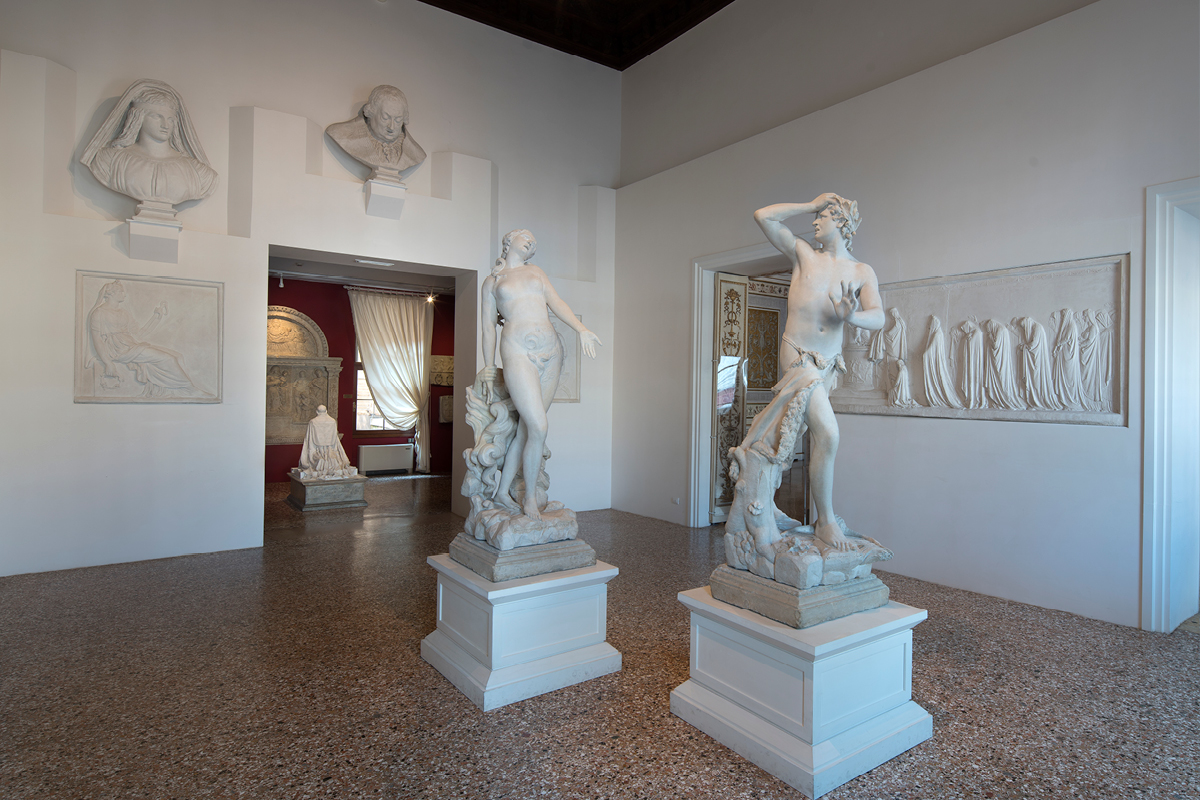
Antonio Canova was born in Possagno in 1757, to a family of experienced stonecutters. It was not long before he met members of the more modern and influential circles of Venice and it was there that he began to develop his fundamental classicist direction and received his first commissions. With Orpheus and Eurydice (1775-76) the sculptor barely eighteen years old, completed his first evocative large-dimensioned sculpture, revealing he was still under considerable influence from the painting style of the Eighteenth century.
This changed immediately with his first sensational masterpiece Daedalus and Icarus (1777-79), which enabled him to go to Rome and finish his training. He made his name once and for all as the most advanced and skilled sculptor in Rome with the creation of the Funerary Monuments to Popes Clement XIV and Clement XIII. Plaster casts of various parts of these monuments are on display. During the same period, as a personal artistic exercise Canova sculptured a series of Bas-reliefs in plaster (1787-92), inspired by episodes from the great Greek-Roman classical poems of Homer, Virgil, and by Socrates. On display here are three of his most famous bas-reliefs: The Death of Priam; The Dance of sons of Alcinous; Hecuba and the Trojans offer Pallas the Peplos.
With such innovative works that as early as the end of the eighteenth century Canova created and diffused a neo-classical canon that was destined to resounding international success.
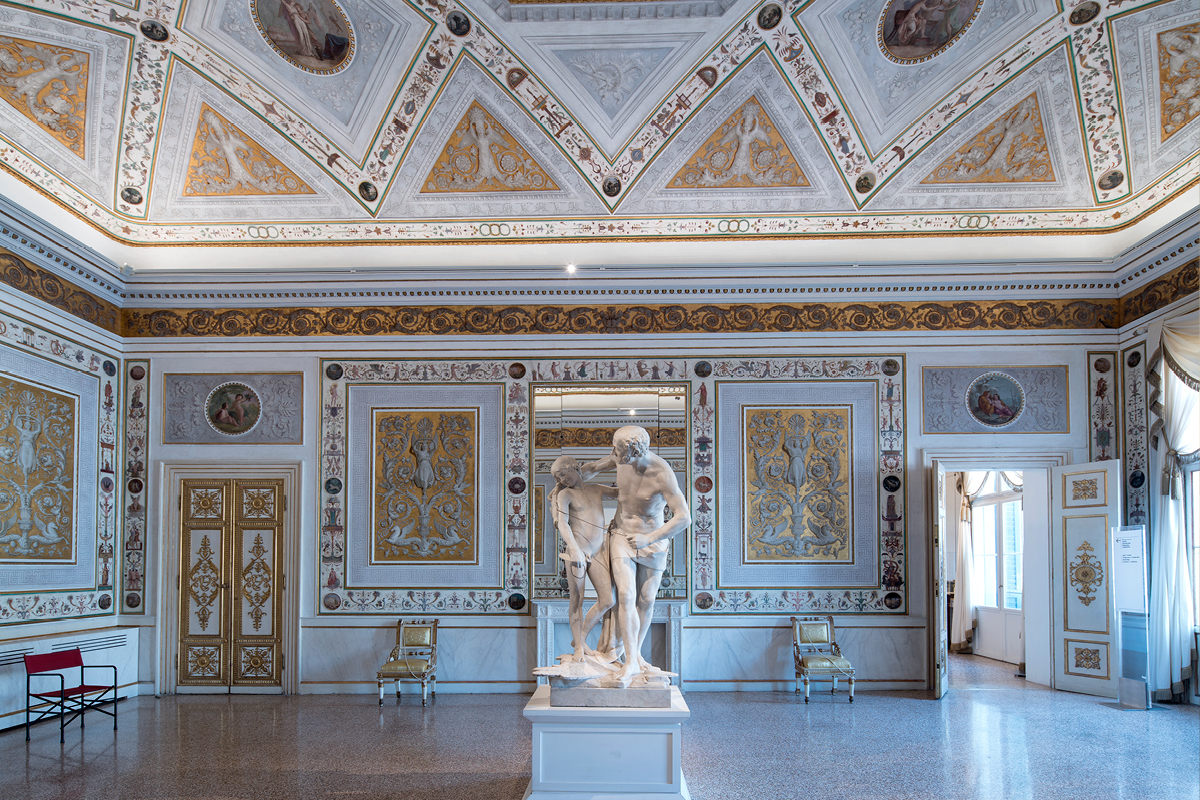
Canova and Venice: Daedalus and Icarus, first masterpiece
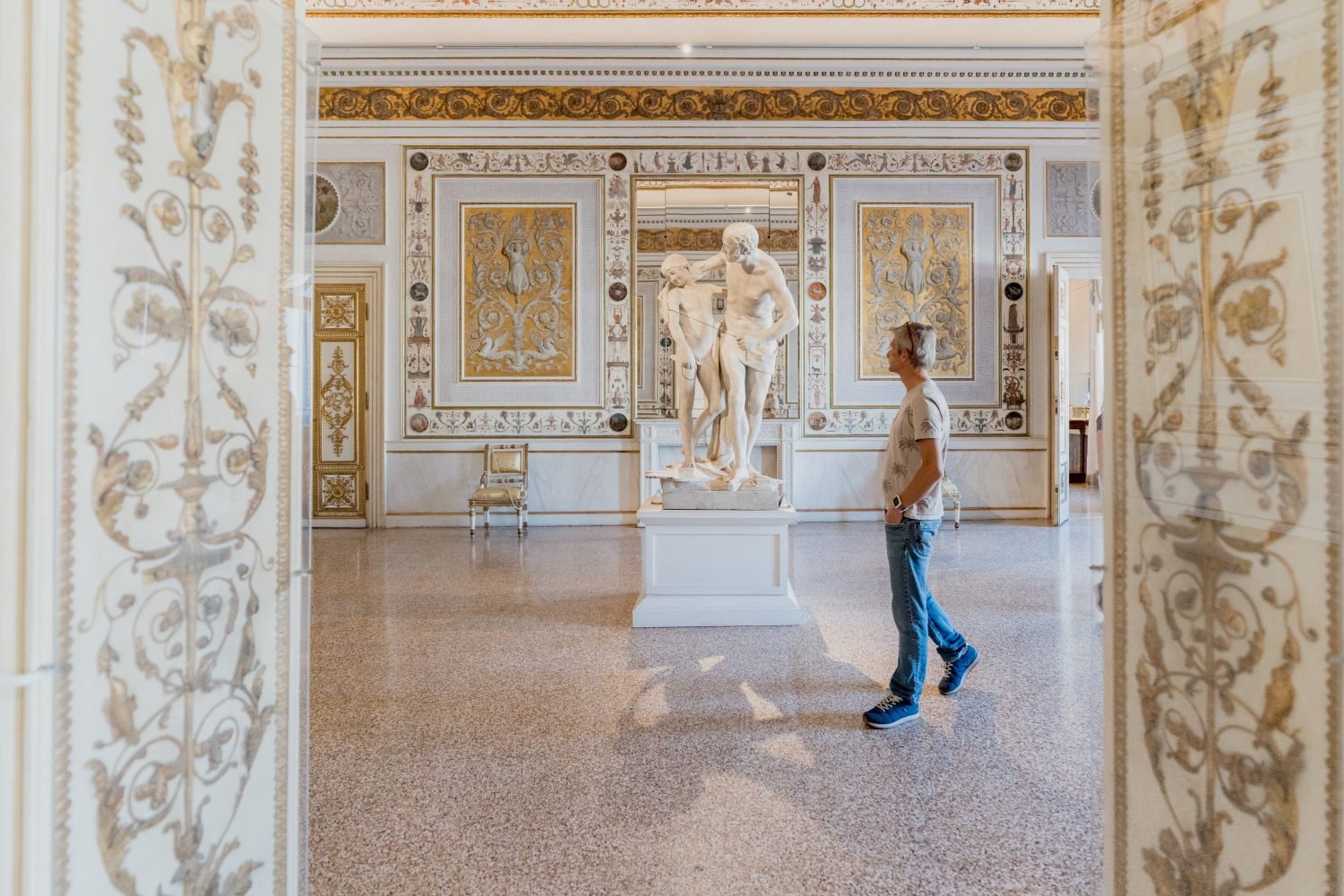
In the centre of the magnificent ‘Sala delle vedute’ (Room of views) (1811 and later) is the marble group of Daedalus and Icarus, one of Antonio Canova’s earliest masterpieces. The work was commissioned by the procurator Pietro Vettor Pisani for his Palazzo Pisani Moretta overlooking the Grand Canal.
Just twenty years old, with amazing geniality here Canova achieved a suggestive contrast between the classical model (Icarus) and the characteristically Venetian particular eighteenth-century pictorial naturalism, inspired by Giambattista Piazzetta’s ‘heads’ (Daedalus). This skilful composition links the two figures around an ‘empty’ void, enclosed circularly by the thread that goes from Daedalus’ wing and hand.
The treatment of the marble surface is vibrant and still a long way away from the polished purity that was to become a characteristic of Canova. An eloquent trademark of the sculptor, the mallet and chisel lying at the feet of the elderly architect are placed in ideal continuity with the artifice Daedalus. Presented at the ‘Fiera della Sensa’ (Ascension) in 1777 where it met with resounding success, young Canova earned 100 gold zecchins for this work, which he used to travel to Rome for the very first time.
Canova, the Empire, the Glory: creating the myth
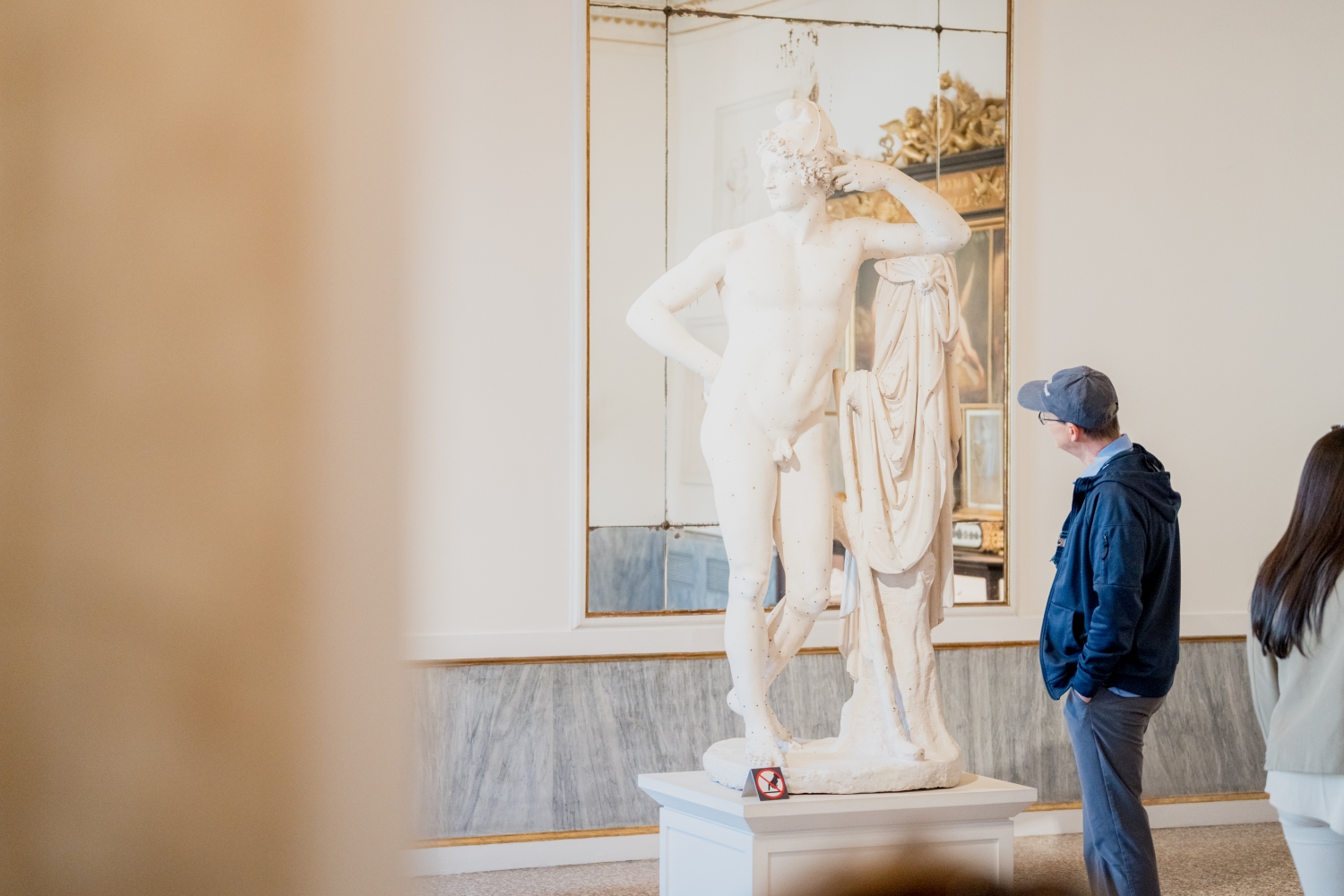
The sculptor began working in the Napoleonic field since the aesthetic ideals Canova was championing had been adopted by Napoleon as a symbol of the Empire. The Bonaparte family commissioned him with numerous sculptures, including Paris, the plaster model (1807) of which is on display here.
Once the Napoleonic Empire had fallen, he returned to Paris in 1815 to reclaim all the art works that had been taken (including the Horses of Saint Mark’s for Venice).
He died in Venice on 13 October in 1822. The extraordinary and almost ‘mythical’ international renown that Canova enjoyed during his lifetime became a cult after his death; it lasted a considerably long time and united the value of art with the popular risorgimentale feeling of Italianism and national liberation he had expressed in his career, actions and evocative works. Testimony to this is the exceptional Canova Mobile that was assembled by the wealthy Venetian merchant Domenico Zoppetti for his working tools, sketches, drawings, autograph paintings, personal keepsakes, portraits, nineteenth-century ‘Canova-mania’ objects.
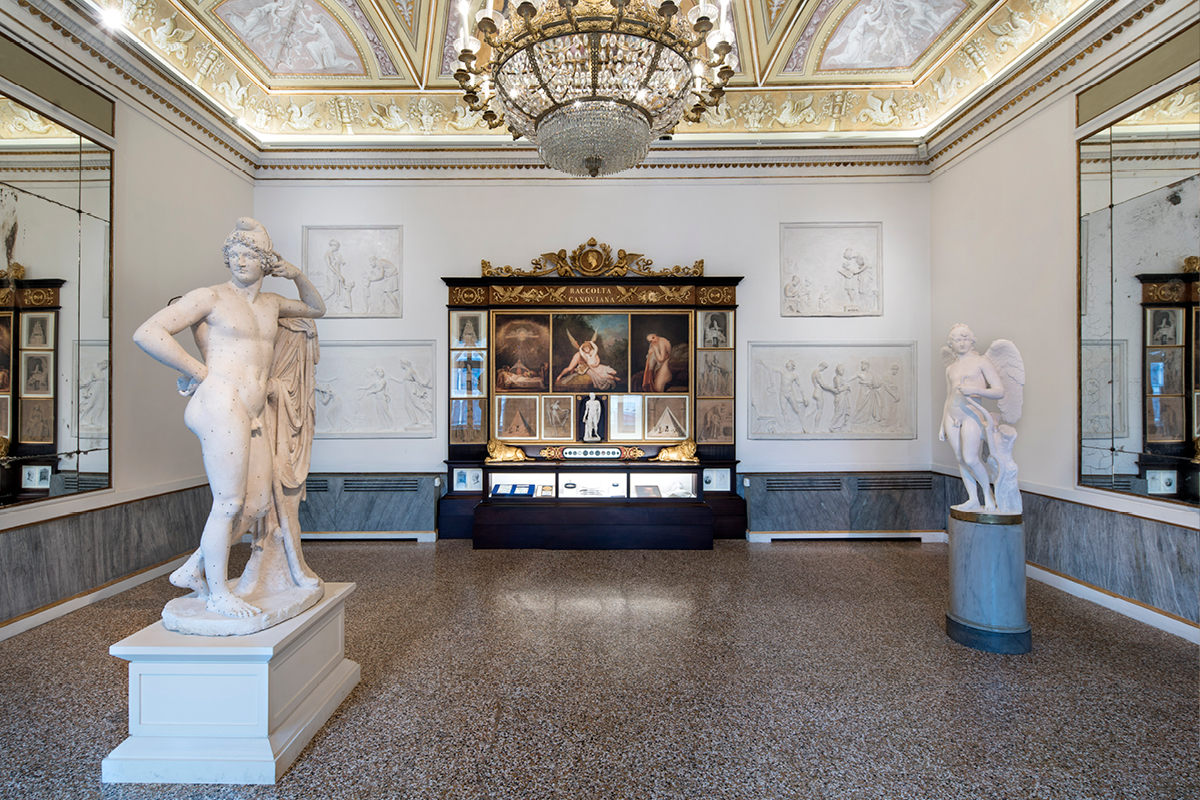
The rooms were restored as part of the “Sublime Canova” project, with the support of Venice Foundation, Friends of Venice Italy and the Comité Français pour la Sauvegarde de Venise.