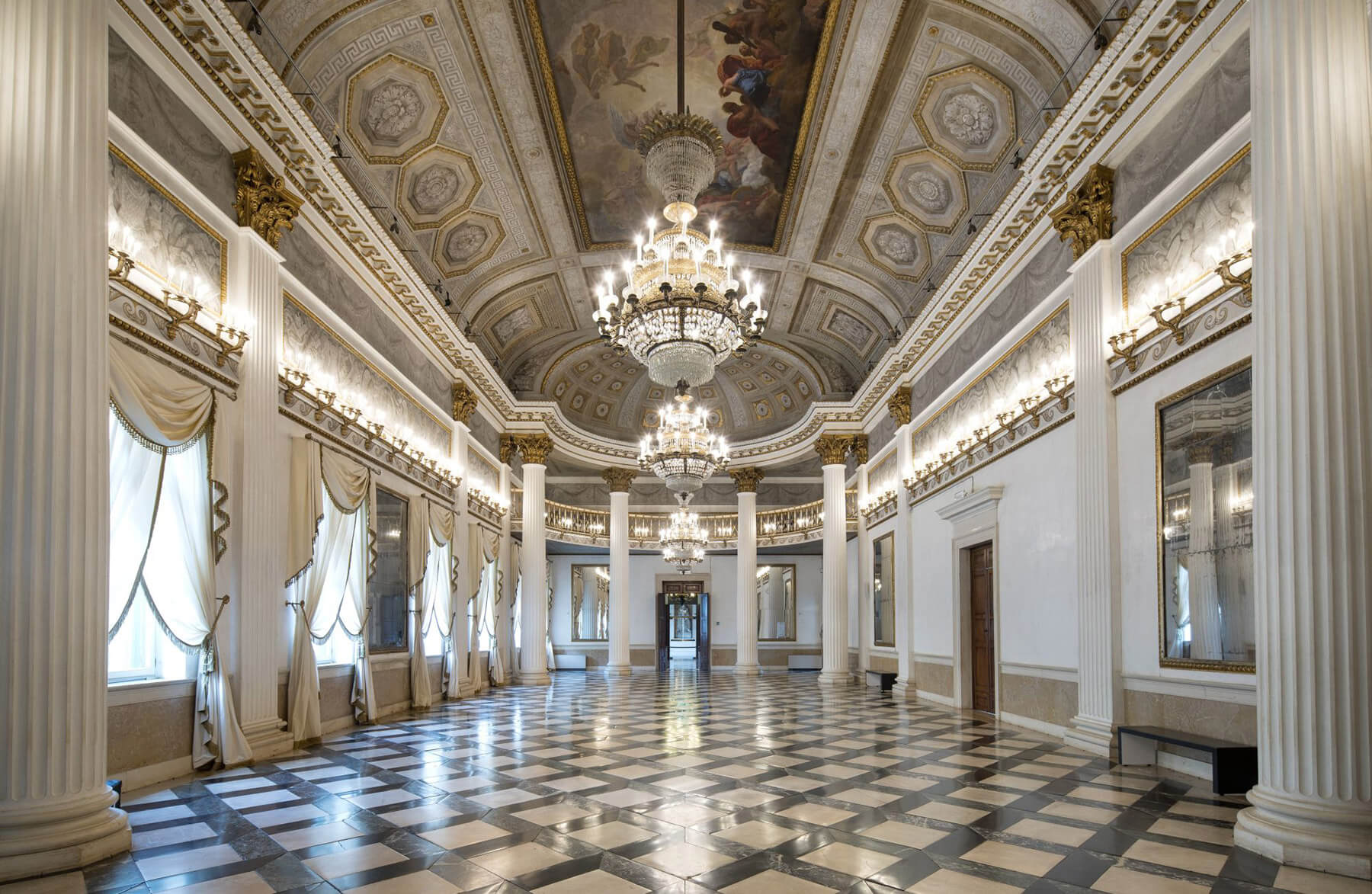
The Picture Gallery
Paolo Veneziano and 14th century Veneto painters. Early Venetian painting is closely bound up with the traditions of Byzantium – and of the Paleologue empire in particular. Gradually, during the 14th century, it would become more open to the modern and Gothic influences coming from mainland Italy. Features characteristic of Central Italian painting can already be seen in the Genealogy of Christ, with the Life of Christ and the Virgin while the Madonnas and Child of the Greco-Veneto tradition retain a Byzantine visual language reinterpreted through a Venetian lens.
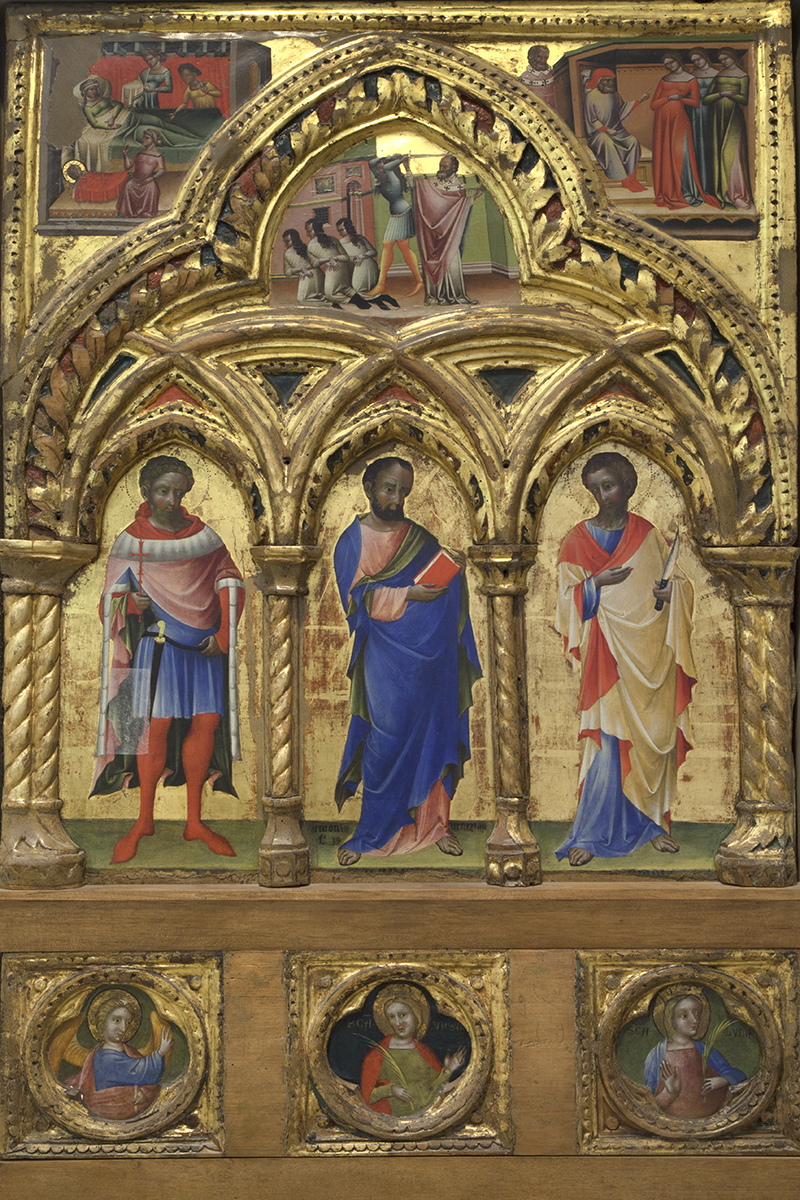
A turning-point in painting within the lagoon would come with Paolo Veneziano, the most important of early 14th century Venetian painters, who developed his own very personal artistic language, with a subtle balance between Byzantine and Gothic influences. In the panels with saints from the parish church of Grisolera, the elongated figures remain faithful to Byzantine models, but the vivid colour, the richly-adorned vestments, and the artist’s care in portraying individual figures with shrewd expressions and elegant movements, all indicate the influence of Gothic art.
The most significant artist in Venice during the second half of the 14th century was Lorenzo Veneziano, developing a distinctly Gothic language marked by great chromatic clarity and narrative vitality. His works, characterized by brilliant, enamel-like colors, incorporate elements from the Po valley and Emilian regions.
Flamboyant Gothic. Gothic Art in Venice was to flourish long and successfully, particularly in the fields of domestic, public and religious architecture, playing a key role in establishing the appearance of the city. Rare evidence of this is to be seen in two fragments of fresco decoration depicting allegorical Virtues, discovered in a house in San Giuliano and now in the museum: these sit within Flamboyant Gothic seats, characterized by a pictorial language of continental origin, traceable to the Paduan milieu, yet with Venetian inflections in the palette used. Though dating from an earlier era (late 13th and early 14th century), for conservation reasons the Casket of the Blessed Giuliana di Collalto is also on display in this room, revealing a very Western attention to expression that has little to do with Byzantine influences. The section further includes Gothic sculptures, such as architectural fragments, a marble transenna, and pinnacles in Istrian stone with French influences, as well as the masterpiece by Jacobello dalle Masegne, the marble portrait of Doge Antonio Venier.
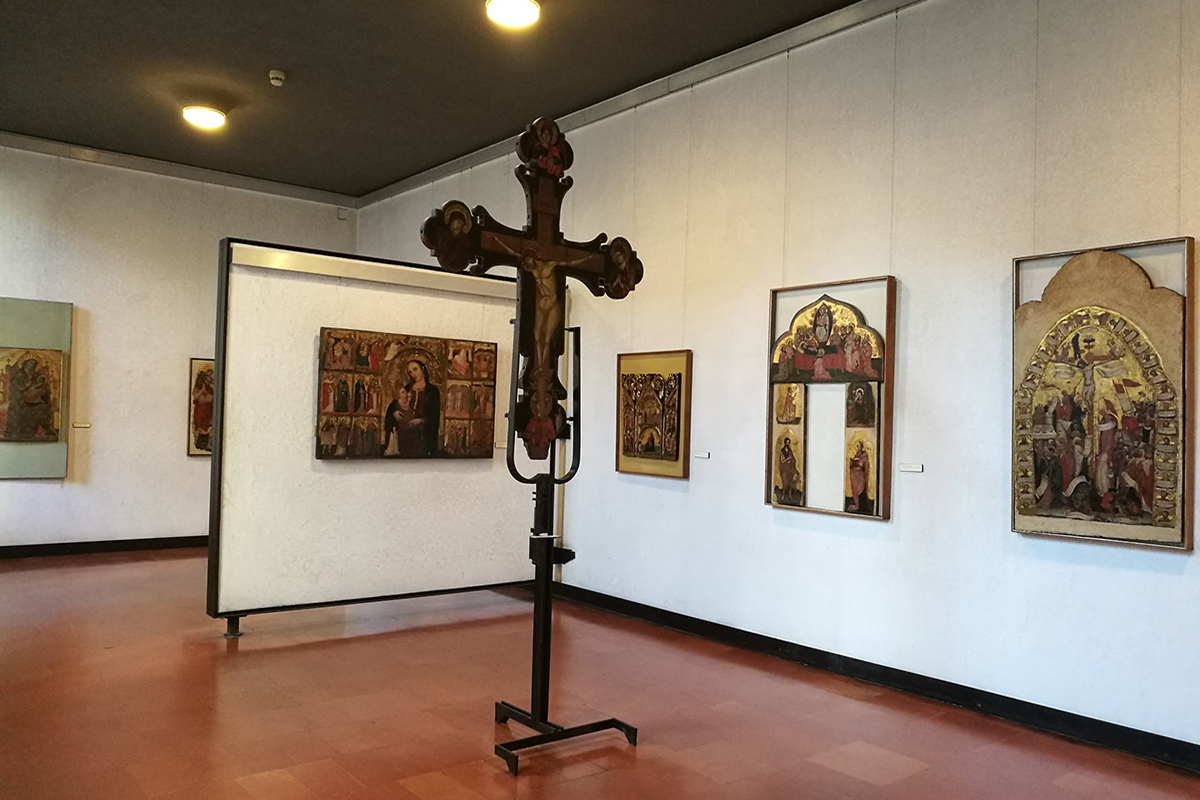
In Gothic painting, Whilst still maintaining the severity of neo-Byzantine work, the numerous panel paintings reveal the influence of mainland Italy in various ways. Artists such as Federico Tedesco, Stefano Veneziano, the “Master of the Correr Altarpiece”, Stefano di Sant’Agnese and Jacobello di Bonomo interpret the Venetian Gothic language in different ways, balancing tradition with openness to International Gothic influences.
The early 15th century and International Gothic. In the early 15th century Venice, only out-of-touch artists continued to take the Byzantine tradition as their model. The city’s expansion onto the mainland was leading to contacts and an important interchange with other Italian and European capitals. Work on the Doge’s Palaces was attracting such renowned artists as Gentile da Fabriano, Michelino da Besozzo and Pisanello, who made a key contribution in introducing International Gothic. Works belonging to this milieu are characterized by a sumptuous taste and a refined decorative vocabulary. A central figure is Michele Giambono, painter and mosaicist. Another key protagonist is Jacobello del Fiore, the author of images marked by intense decorative refinement and gentle expressiveness. The itinerary also documents exchanges with central Italian painting, through works by Matteo Giovanetti, and with Tuscan culture in the cassoni depicting the Stories of Alatiel.
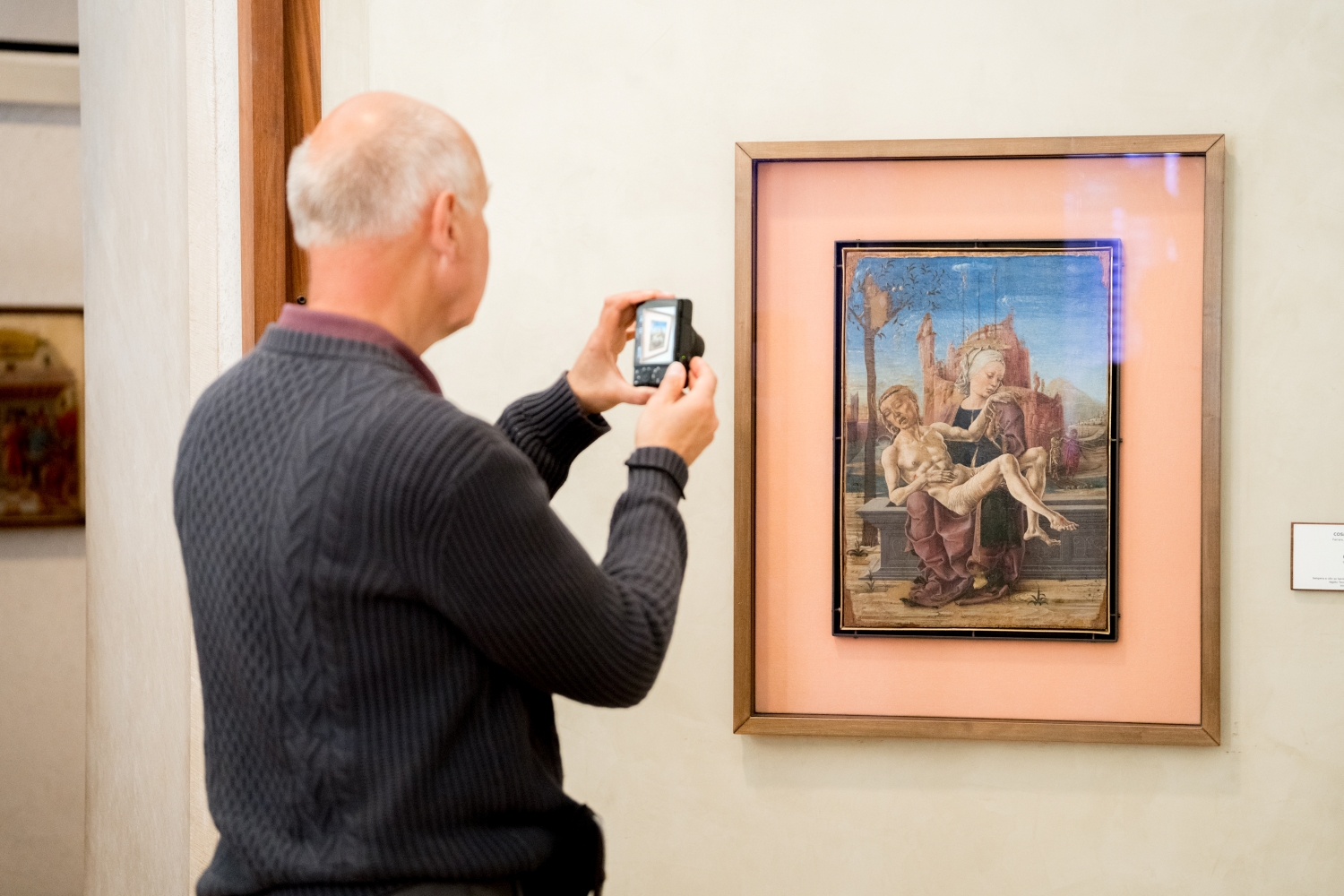
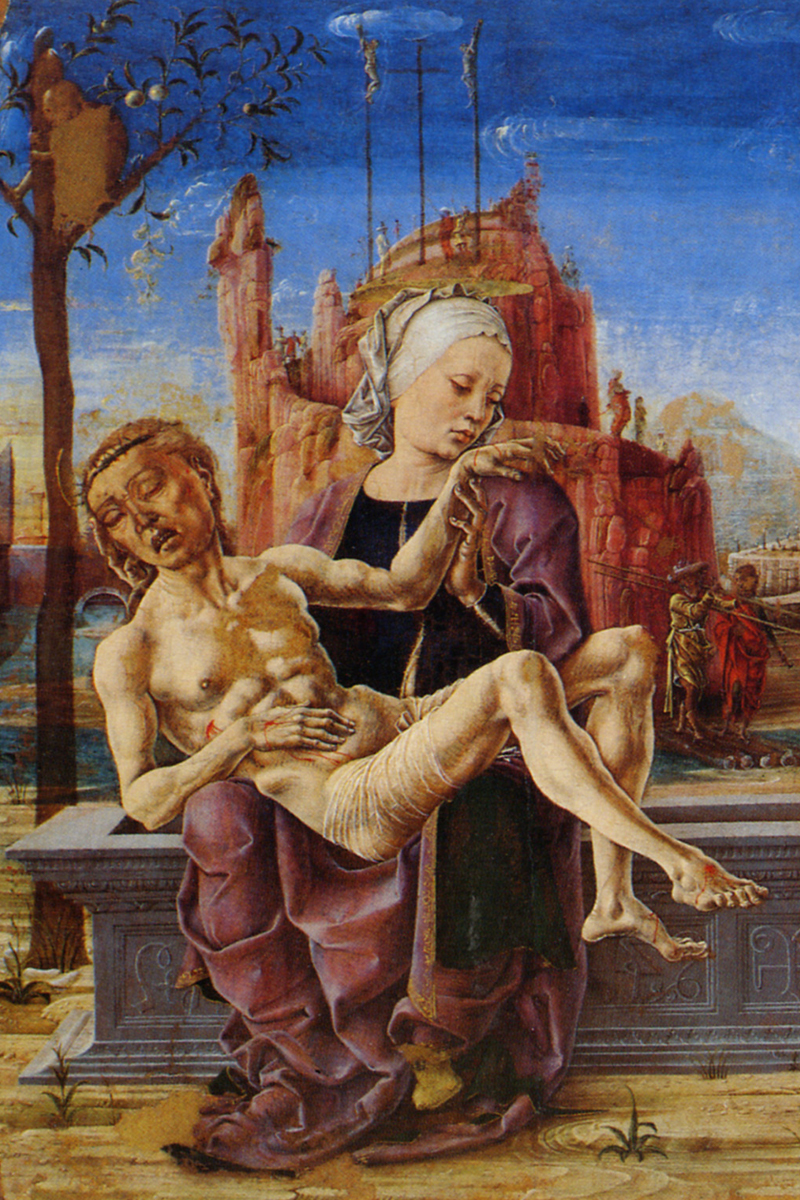
Alongside International Gothic, new Proto-Renaissance and Ferrarese influences emerge, well represented by the Pietà by Cosmè Tura, a masterpiece of intense poetry and enormous pathos, and by works that bear witness to the dialogue between Venice, Ferrara, and Padua, culminating in the Venetian turning point of Bartolomeo Vivarini, a leading figure in the transition from from Late Gothic to Early Renaissance.
The Four Doors Room is one of the few rooms in the Procuratie Nuove that has retained intact its original structure, dating from the 16th and 17th century, furnished with period furniture and 15th-century wooden sculptures.
The itinerary continues with the rich collection of 15th century Flemish painters, bearing witness to the intensity of relations between Venice and Northern Europe. One work that stands out is The Adoration of the Magi by Pieter Brueghel the Younger, one of the variants derived from the famous model by his father, haracterized by a precise and analytical compositional approach and a miniaturist technique so refined that some details can only be discerned with a magnifying glass. Alongside it are anonymous works of great quality, such as the Madonna and Child attributed to Dieric Bouts and the two panels depicting the Annunciation and and St. Zaccaria and St. Joseph.
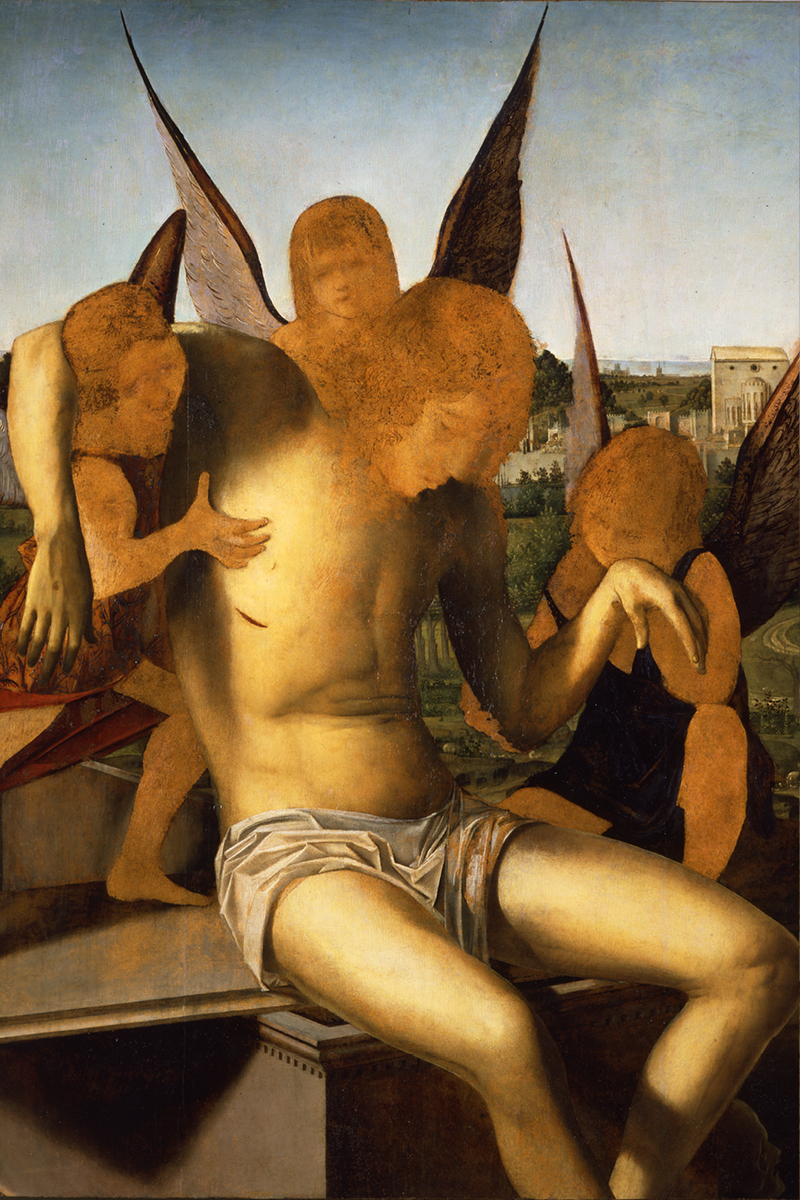
The presence of Antonello da Messina, active in Venice between 1474 and 1476, was to be a decisive influence on the emergence of the great Renaissance School of Venetian painting. The Pietà, the only work by the artist remaining in the city, fully preserves the appeal of his figurative language, blending Flemish and Tuscan elements.
The itinerary continues with works by Flemish and German painters dating from the late 15th to the first half of the 16th century, rich in symbolism, meticulous detail, and expressive intensity.
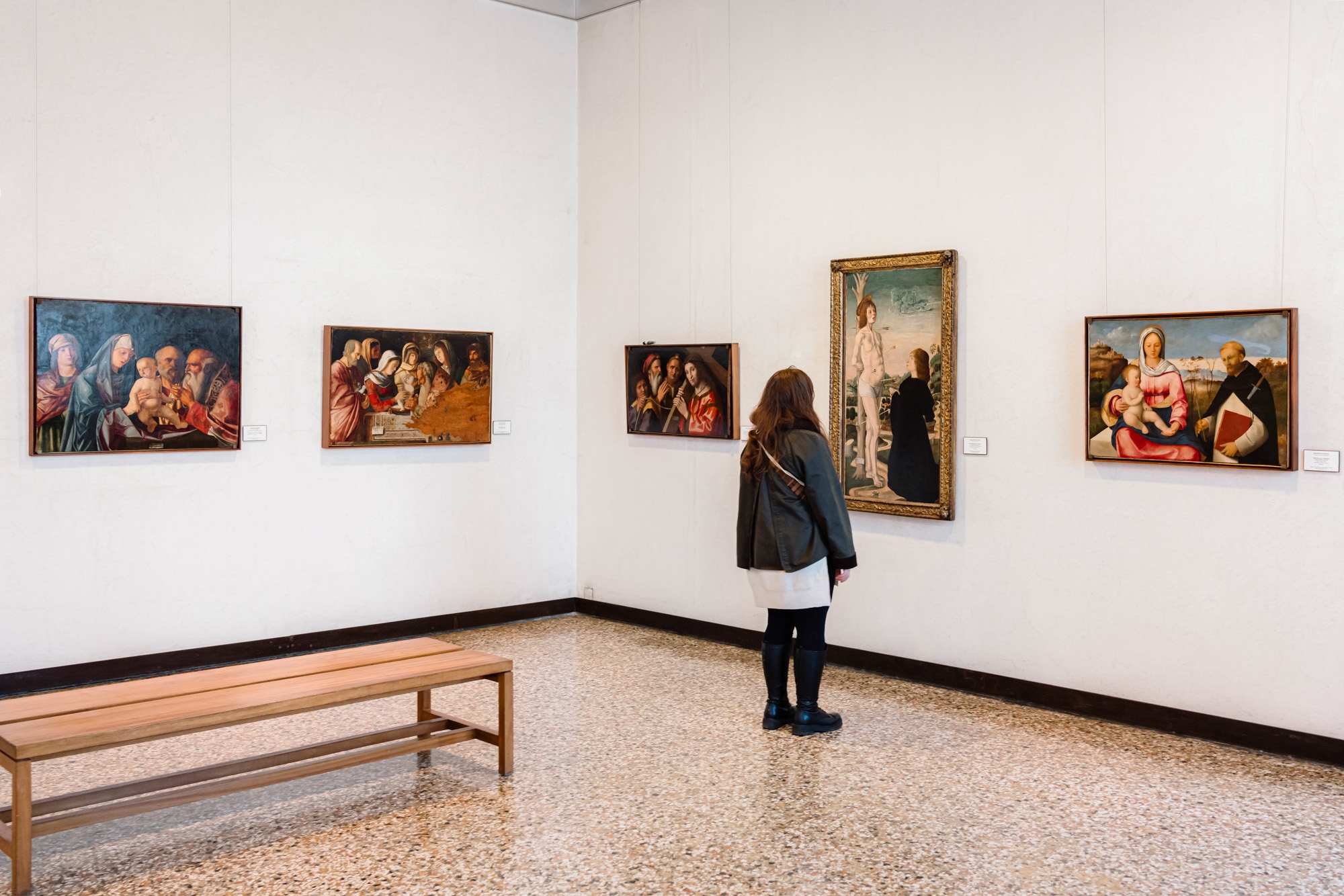
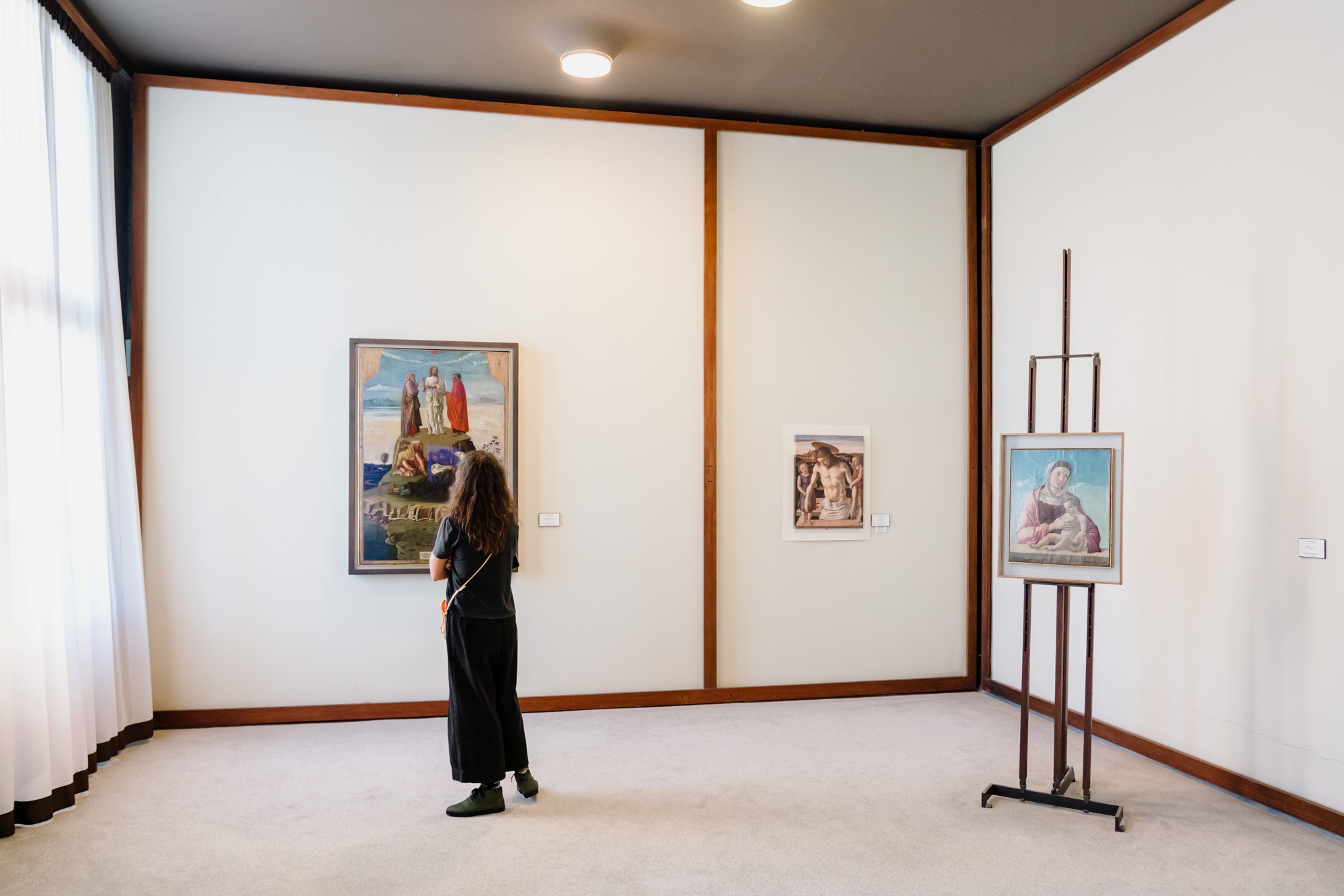
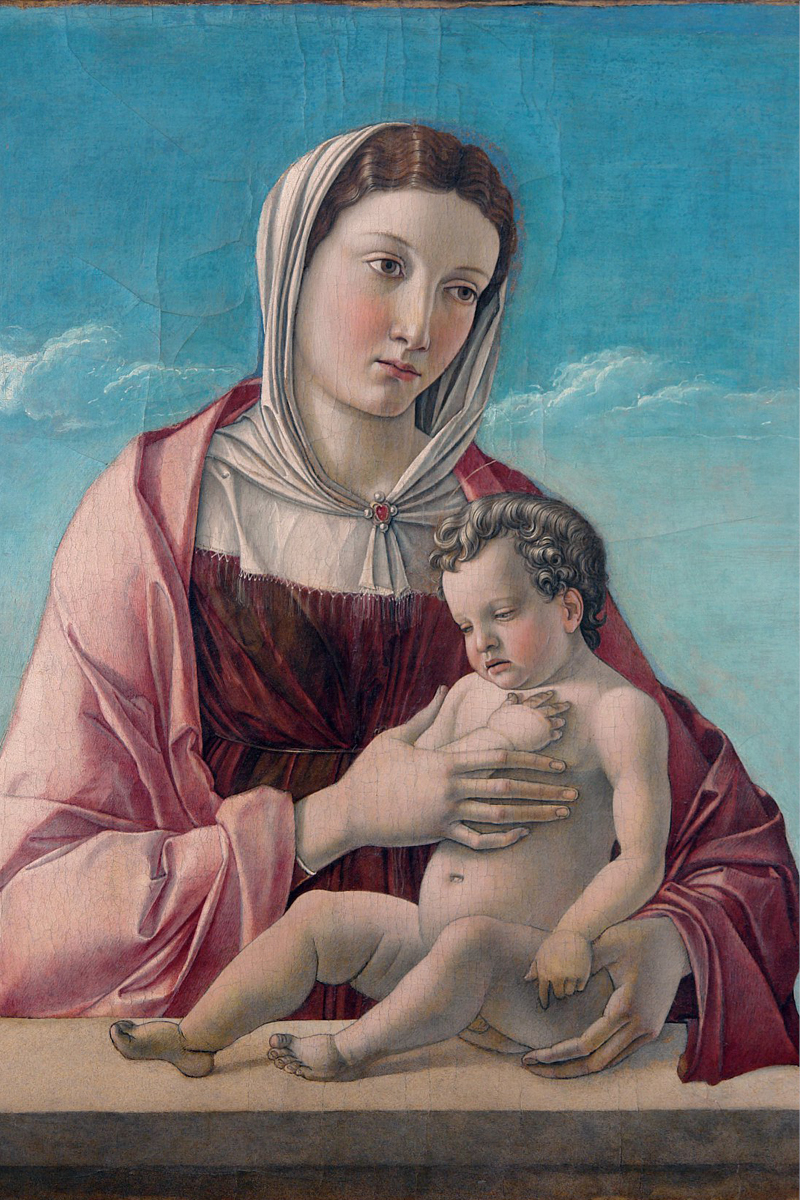
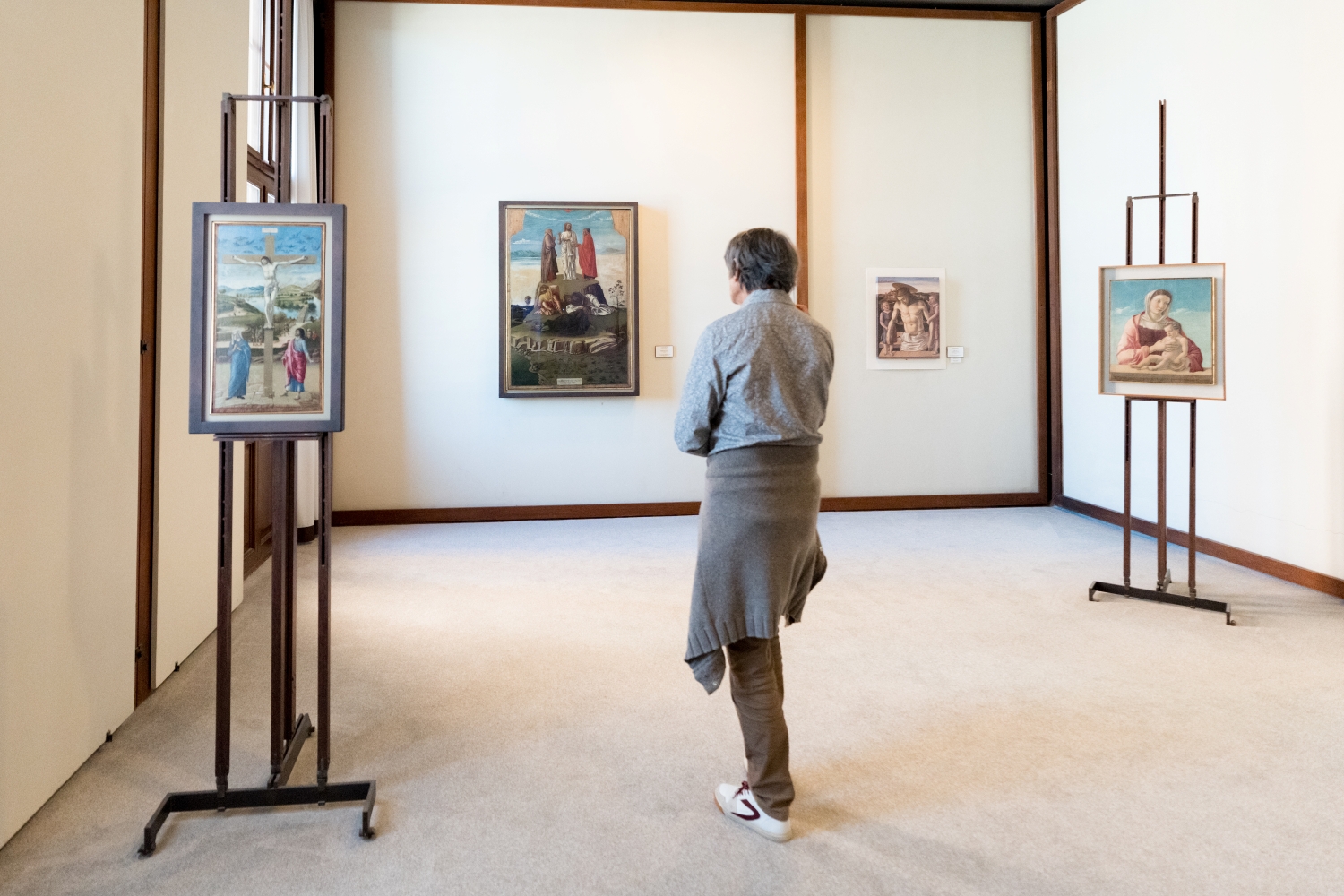
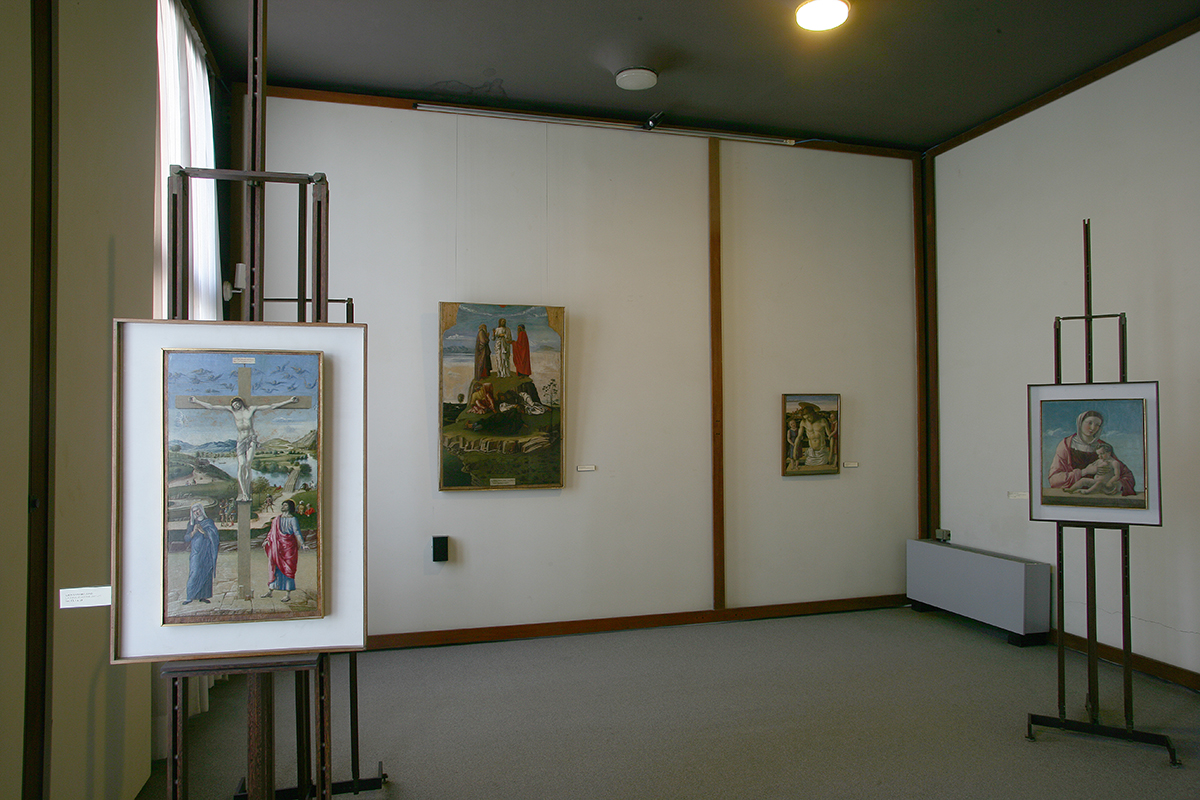
The Venetian painting scene of the 15th century found its foremost protagonists in the painters of the Bellini family. Jacopo introduced to Venice Renaissance influences developed between Florence and central Italy, while Gentile established himself as a refined portraitist of the Serenissima. Giovanni Bellini dominated the world of Venetian painting in the second half of the 15th century, developing an innovative pictorial language sensitive to the experiences of Mantegna and Antonello da Messina, characterized by monumentality, spiritual depth, and a keen attention to color, as demonstrated by the Crucifixion, the Pietà, and the Madonna and Child, also known as the Madonna Frizzoni.
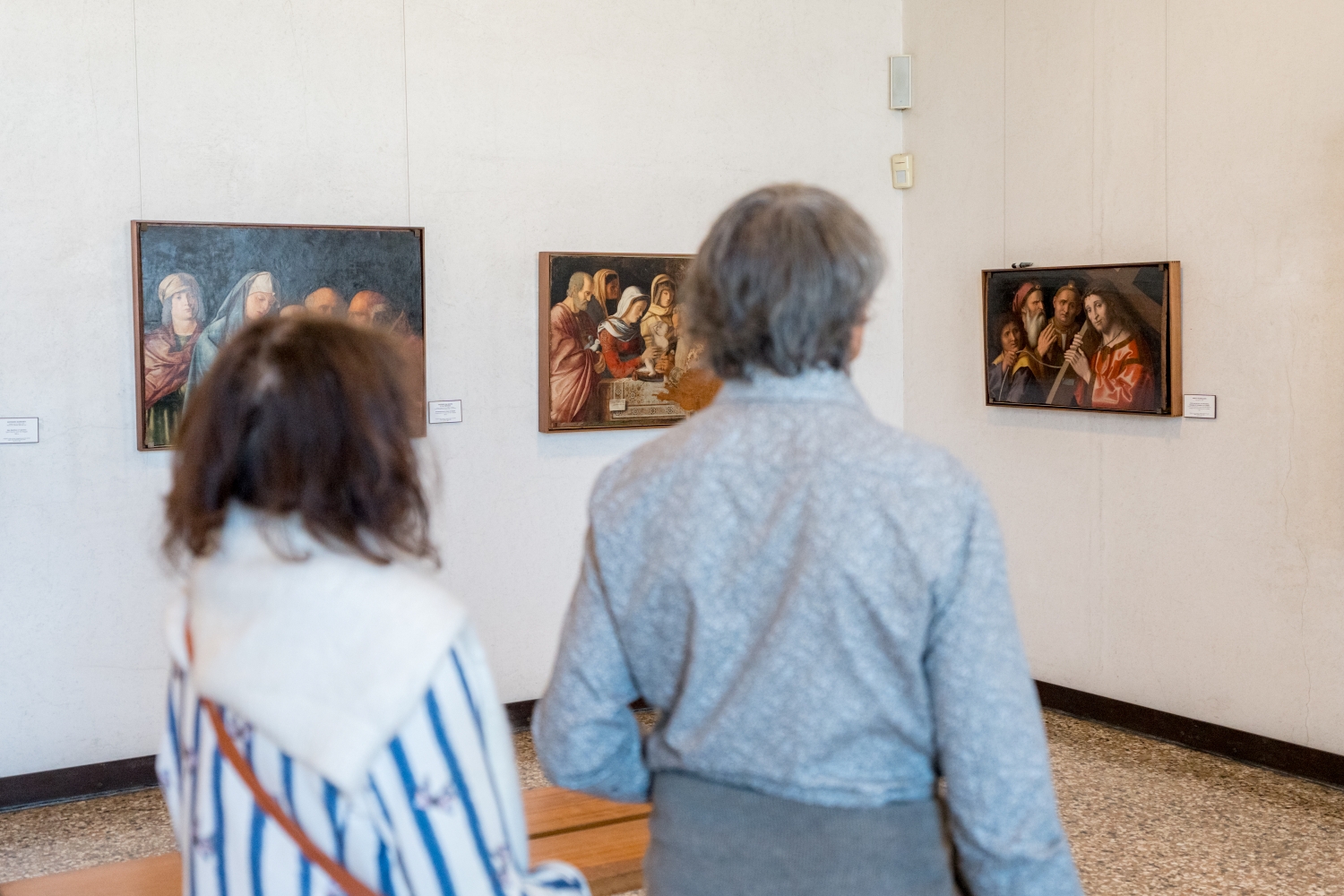
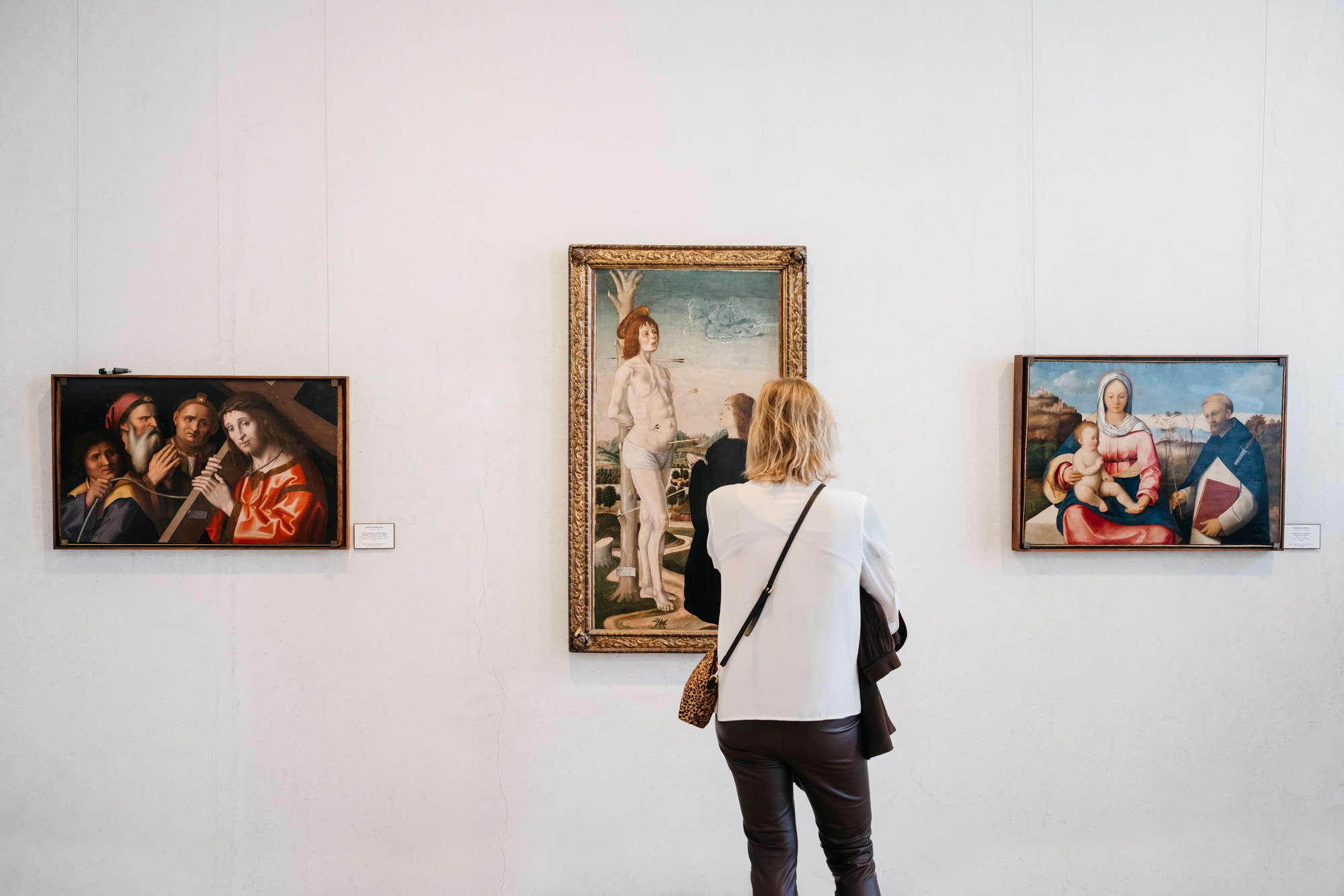
Alongside him worked artists such as Alvise Vivarini, Cima da Conegliano, Lorenzo Lotto, Bartolomeo Montagna, and Marco Basaiti, who developed independent solutions while remaining receptive to the master’s teaching.
Considerable space is devoted to Vittore Carpaccio, the great painter of narrative cycles of late 15th-century Venice. The celebrated painting Two Venetian Gentlewomen, dated between 1490 and 1495, is rich in symbolic references alluding to virtue, marital fidelity, and social nobility. Once interpreted as a scene of courtesans, the work in fact depicts two ladies awaiting the return of their husbands from hunting in the lagoon, as confirmed by its connection with A Scene of Hunting in the Lagoon, now in the Getty Museum in Los Angeles. The section concludes with St. Peter Martyr, a testament to the artist’s late phase.
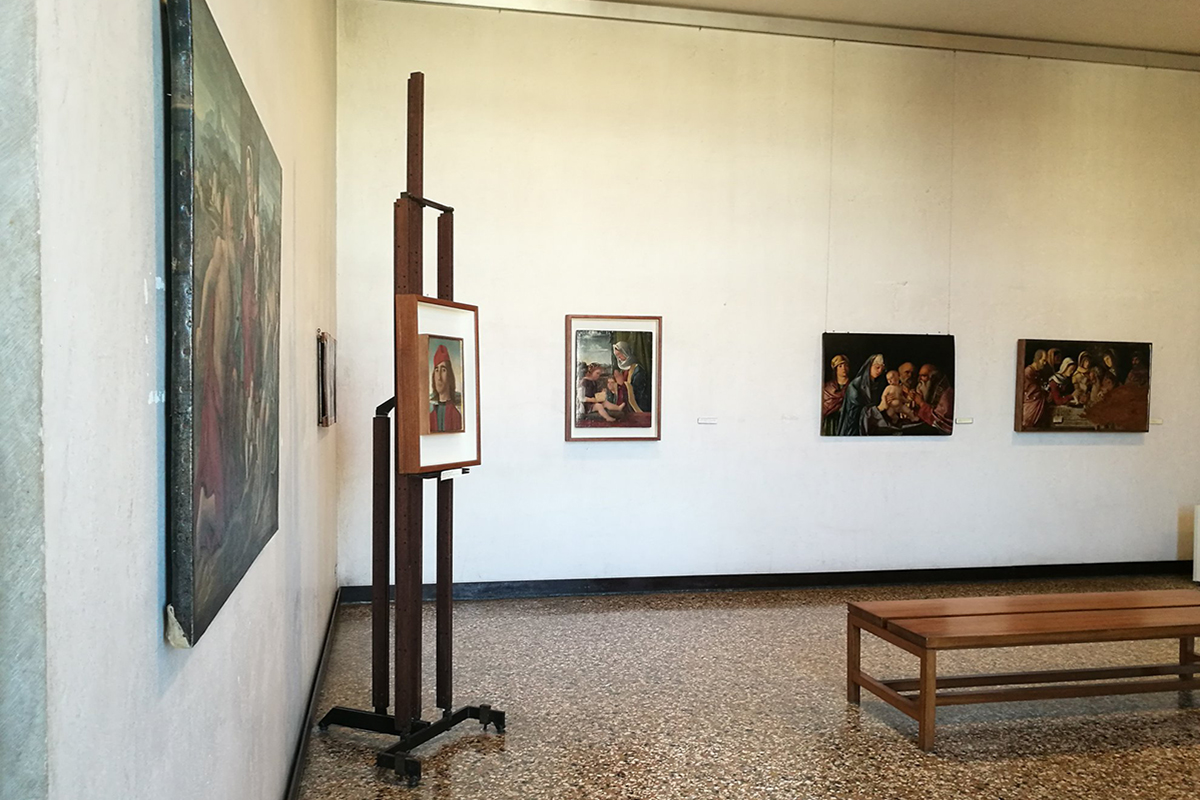
The itinerary follows a sequence that leads visitors from Carpaccio and the minor artists of the 16th century through the applied arts and on to the Library. Vittore Carpaccio’s Madonna, Child and St. John the Baptist, now firmly attributed to his early phase around 1489, was once considered a copy. Restored thanks to the support of Save Venice Inc., the work has revealed its pictorial qualities and underlying drawing. The Gentleman in a Red Beret, painted between 1490 and 1495, has recently been attributed to an artist of the Bologna/Ferrara area. Alongside these are works by Lazzaro Bastiani and by painters active within the Bellini circle, such as Vincenzo da Treviso, Marco Marziale, Marco Palmezzano, Giovanni Mansueti, and Pasqualino Veneto.
This is followed by the section devoted to artists of the Bellini circle, featuring Gerolamo Santacroce, who was active in Venice with his own workshop, his son Francesco Santacroce, and Boccaccio Boccaccino, as well as 16th-century sculptures and ivory objects.
The visit continues with the Greek painters of Madonnas in Venice of the 16th and 17th centuries, witness to the close ties between Venice and the eastern Mediterranean: from the early works of El Greco to paintings by Giovanni Permeniate, Emanuele Zane, Theodoros Poulakis, and Michael Damaskinos, in which Byzantine tradition and Venetian painting coexist.
The itinerary concludes with 15th and 16th century Majolica representing the major Italian workshops, and with the Library, featuring 18th-century furnishings, rare books, and sculptures.