Venetian Culture
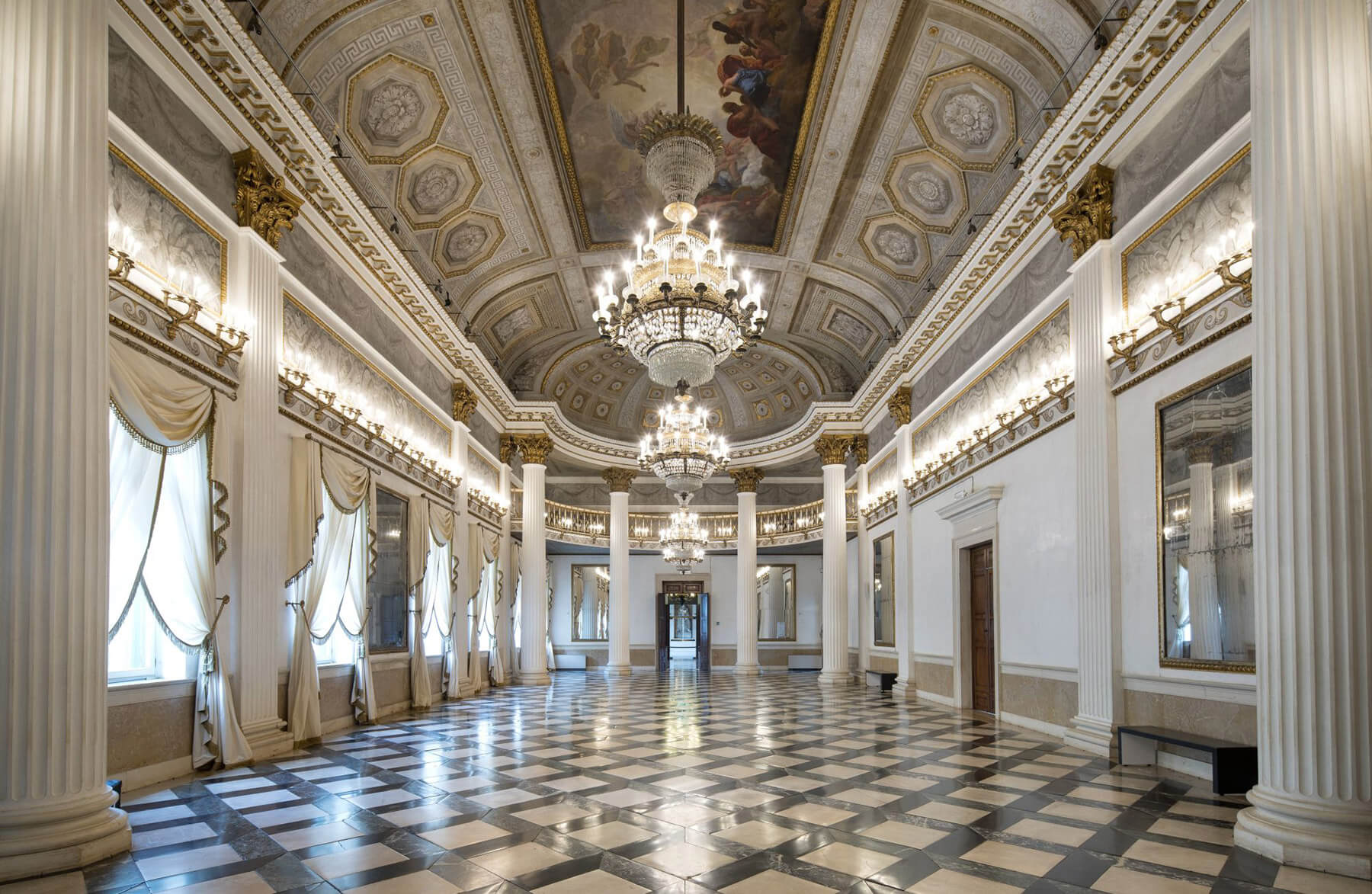
Along with the Neoclassical section, the first floor of the museum is occupied by 20 rooms which illustrate the life and culture of the Venetian Republic over the centuries.
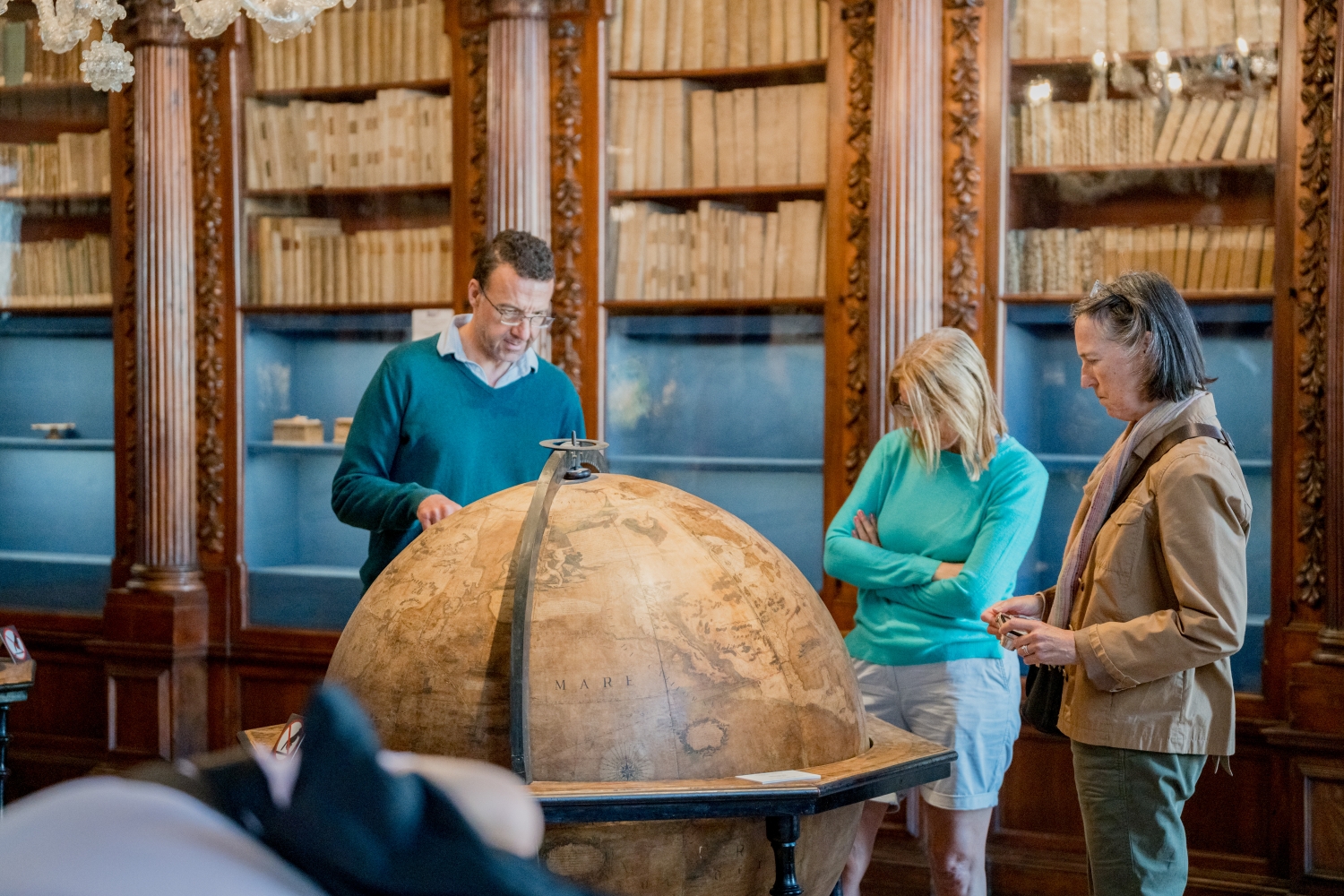
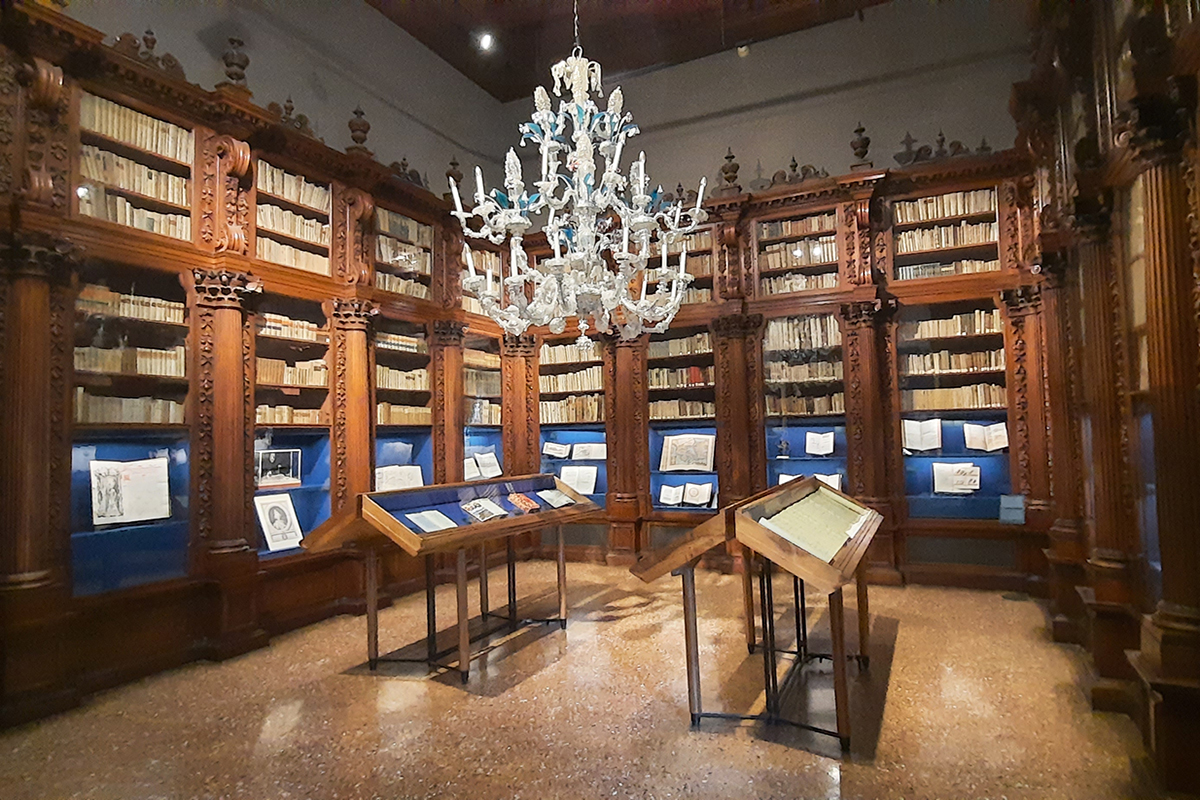
Pisani Library in San Vidal houses monumental 17th-century walnut bookcases from the Pisani family, a magnificent example of classicist furniture with Baroque influences. Rare manuscripts, printed works dating from the early 16th century to the end of the 18th, together with the museum’s large collection of ducal orders and regulations are preserved here.
The Magistrature (Civil Authorities) rooms house the portraits of Senators and Procuratori di San Marco, a position immediately below the Doge, wearing the traditional gowns expressing dignity, decorum, and service to the community. Of particular note are the austere Portrait of Bailo Giovanni Emo, Venetian ambassador to Constantinople, attributed to Pietro Uberti (1671-1726), and the Portrait of Vincenzo Querini by Bartolomeo Nazzari (1699-1750).
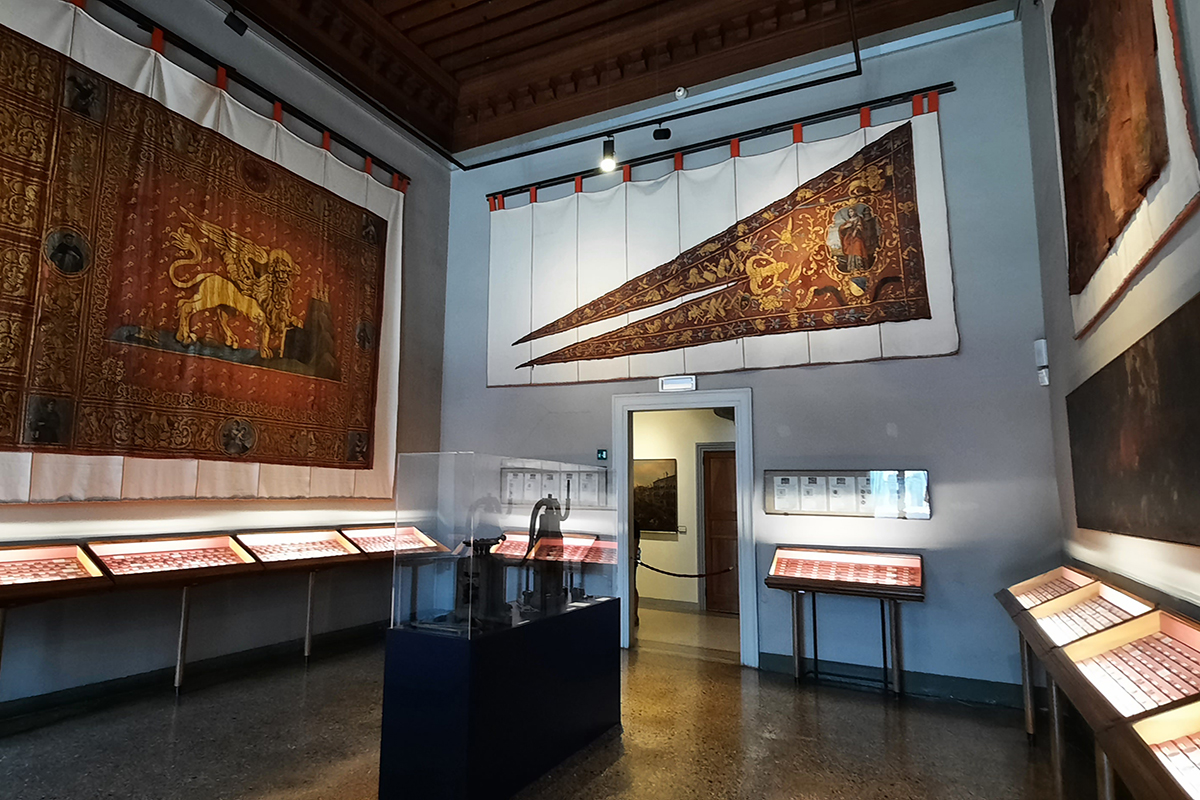
Coinage. The Museo Correr has an extraordinary collection that includes an almost complete set of the coins minted by the Republic of Venice from its very foundation (ca. 820) to its end (1797).
The chronological itinerary allows visitors to trace the unfolding of the city’s history as an international center of trade. From the earliest coins of imperial origin, the route leads to the grosso matapan of Enrico Dandolo and to the gold ducat, later known as the zecchino, the coin that became a symbol of Venice’s international commerce. The purity of the metal and the stability of its weight remained the defining characteristics of the zecchino, which stayed unchanged for 250 years.
As economic balances shifted and precious metals flowed in from the Americas, Venice was able to innovate by introducing new types of coinage, known as the lira tron or the trono. Completing the room are the oselle, coins annually presented by the Doge, tokens used for civic and commercial purposes, minting tools, and the large canvas of Santa Giustina and the Treasurers by Tintoretto (1580).
Venice’s maritime vocation was the key to its power. Thanks to its strategic position between East and West, the Serenissima built a dominion founded on commercial expertise and the strength of its fleet. Fast and well-armed galleys were central to this success, driving the military expansion of the Venetian Republic (Stato da Mar) and ensuring the economic reach of its merchant navy. The room Venice and the Sea displays models of galleys, navigational instruments, and evocative paintings of major Venetian naval battles against the Turks, including episodes from Lepanto and the battle of the Metelino Channel.
The Arsenal Room is dedicated to the industrial heart of the Venetian state, responsible for the construction and maintenance of the fleet, as documented by rare views and paintings depicting artisan guilds. A fine portrait by Alessandro Longhi (1733-1813) shows Angelo Memmo IV in the role of Capitano da Mar, the highest-ranking position in the Venetian navy. The display cases contain models of Venetian ships and rare, original examples of navigational instruments.
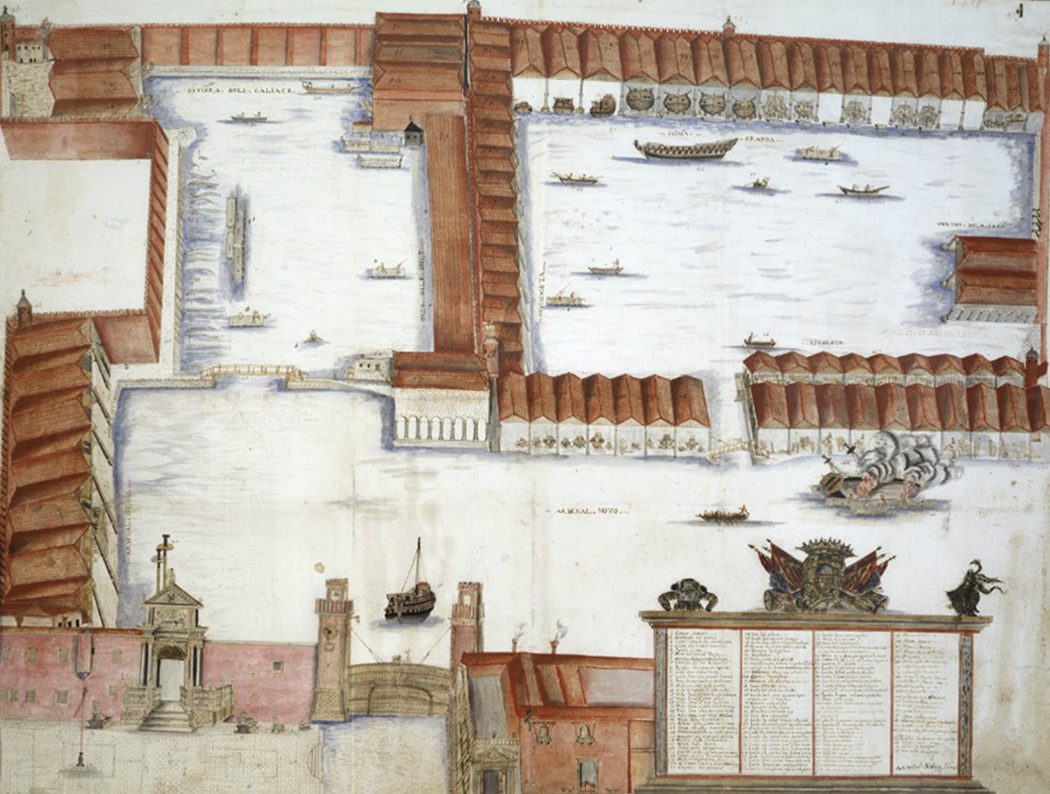
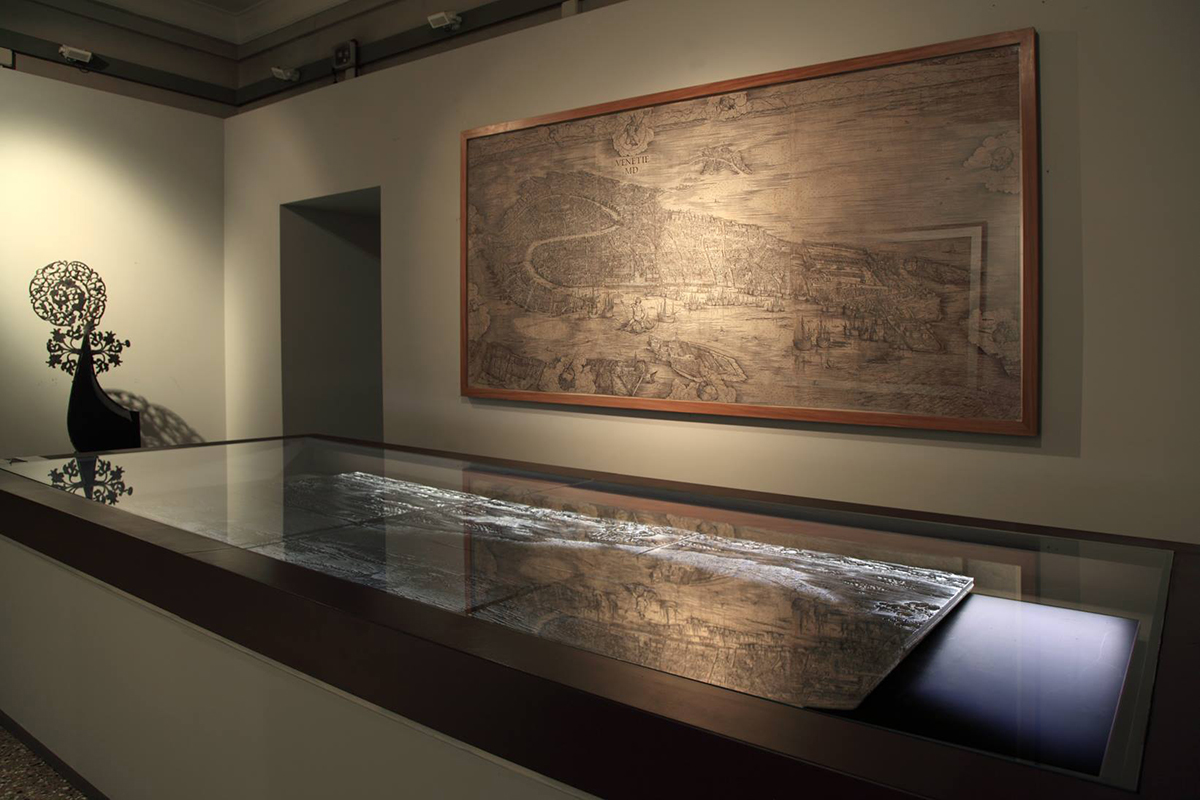
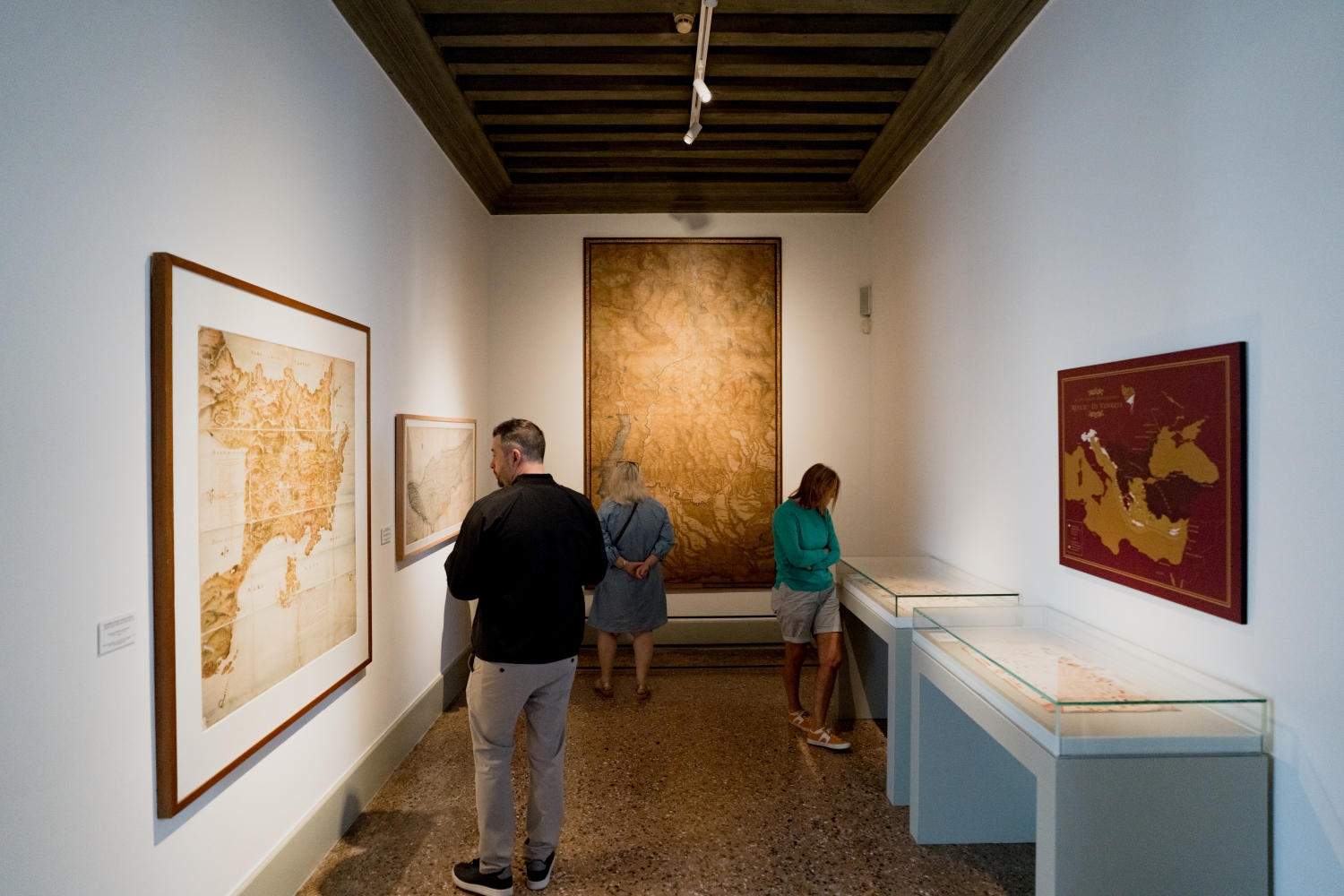
Venice developed on water with constant attention to preserving the delicate balance of the lagoon, as recalled by the Edict of Egnazio, carved in the Urban Layout of Venice room. Large-scale views document the city’s urban development which date from different times in the city’s history.
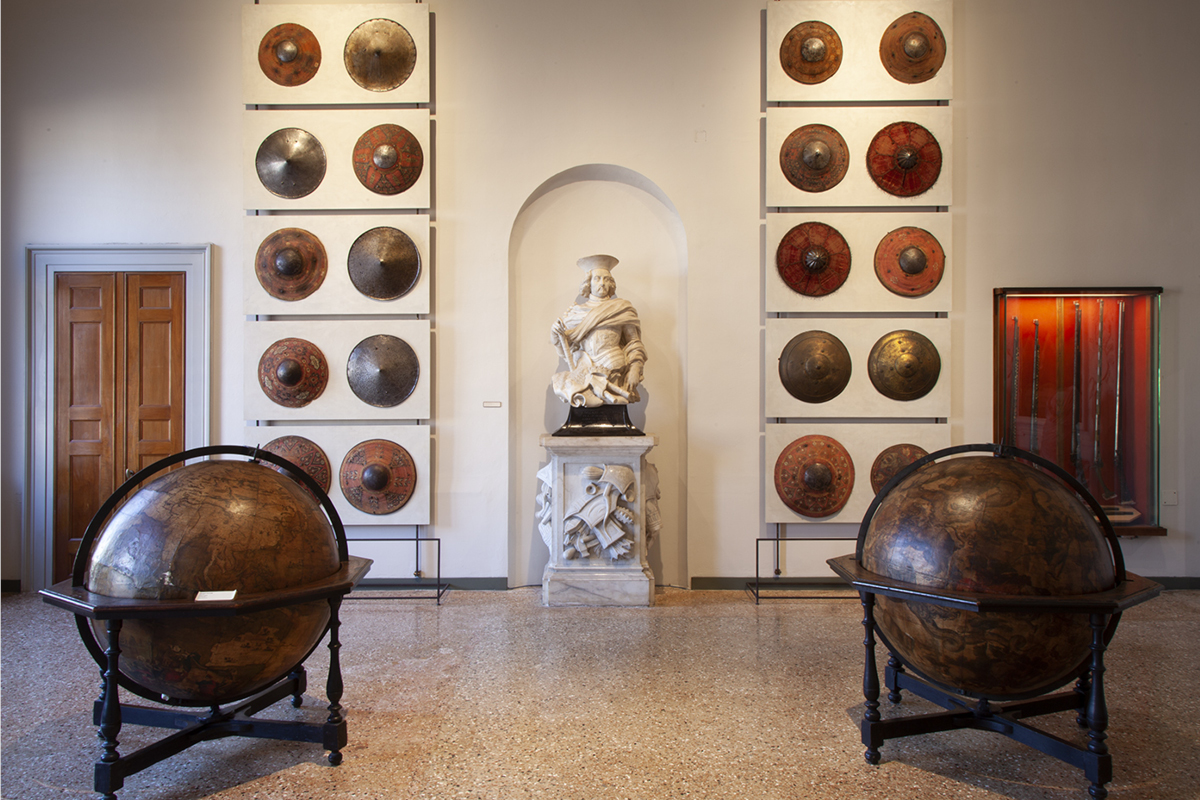
This is followed by the Morosini Armoury rooms, which contains objects and armaments linked with the achievements of Francesco Morosini (1619-1694), one of the last great admirals of the Venetian fleet.
From this room one can continue your visit of Venetian Life and Culture by going through to Room 45, or else pass into the Archaeological Museum nextdoor.
In Room 19, The Masterpieces of Renaissance Majolica, is on display in this room is the so-called “Correr Service”, comprising painted ceramics that have been unanimously recognised as the absolute masterpieces of Italian Renaissance majolica, created around 1510 by Nicola da Urbino. The set comprises seventeen round plates, which is what remains of what was certainly once a much more numerous service, meant for ostentation, featuring mythological, literary, and biblical scenes.
The maiolica stands out for its compositional mastery, pictorial quality, and delicate landscape atmospheres, closely aligned with neo-Platonic sensitivity dominated in the Veneto. Part of the Teodoro Correr collection, the service was likely commissioned by a Venetian patrician.
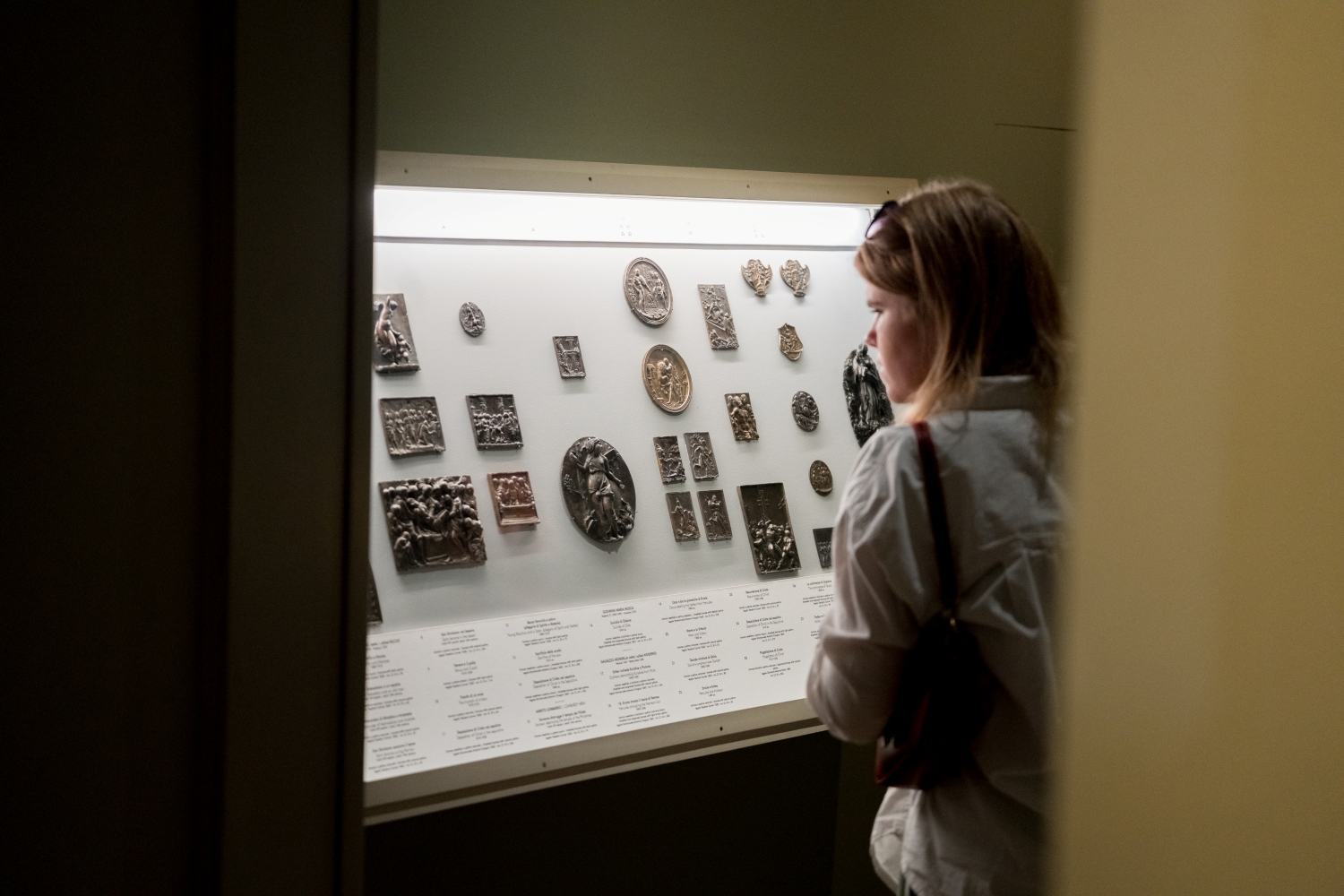
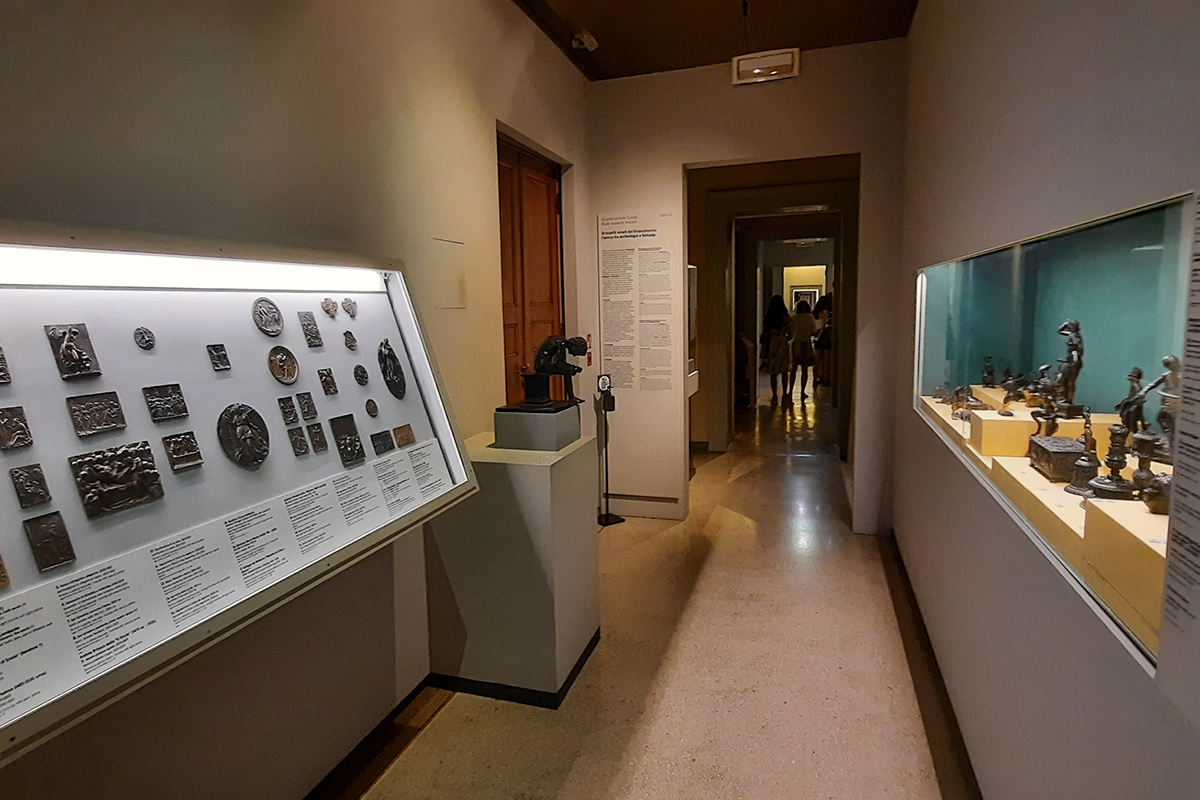
Small Venetian and Veneto bronzes from the Renaissance represented a particular genre that was aimed at a learned elite of cultivated collectors, united by a taste for antiquity and a lively exploration of form and iconography. Ranging from original creations to ‘table’ reproductions of famous sculptures or everyday objects reinvented according to the decorative lexis of the ‘ancient’.
The selection on display primarily documents production in the Veneto area from the second half of the 15th century to the early 17th century, by the best workshops in Venice and in Padua. The central figure is Andrea Briosco, called il Riccio, the driving force behind early 16th-century Paduan production, celebrated for the variety of his subjects, his expressive irony, and the frequent functional use of bronze statuettes, such as oil lamps.
When Jacopo Sansovino (1486-1570) arrived in Venice in 1527, he caused a radical change in Veneto sculpture in a pronounced mannerist sense. In Venice he also devoted himself to the art of bronzes, which was an effective means to spread the new current. His influence is evident in the work of Alessandro Vittoria, marked by an intense vitality of gesture and expression that almost foreshadowing the Baroque. Alongside them worked artists such as Girolamo Campagna, Nicolò Roccatagliata, and Tiziano Aspetti, who carried the Mannerist legacy into the 17th century.
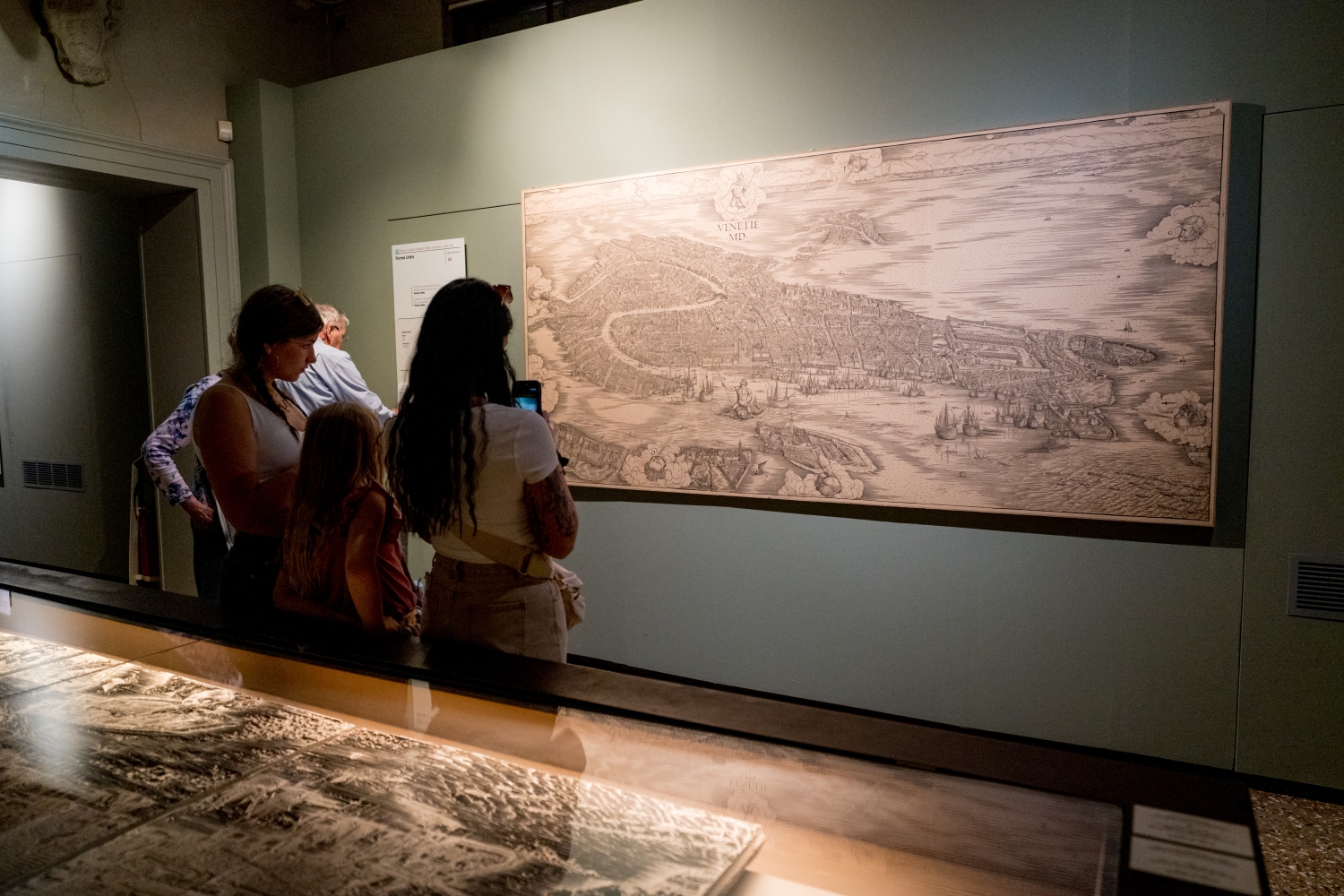
Jacopo De Barbari and the art of woodcut printing. From the late fifteenth century Venice was the European capital of typography and publishing, and the rapid, extraordinary growth of serially reproduced images went hand in hand with this success. This section is devoted to two absolute masterpieces of Renaissance engraving on a wooden matrix, dominated by the celebrated Aerial View Map of Venice by Jacopo de’ Barbari (1500). Together with the amazing pear wood matrices, the first ‘stage’ of the woodcut is shown here. The work impresses for its exceptional technical mastery and for the ambitious undertaking of measuring and depicting the city, portrayed “from above” in a synthetic vision governed by geometry and perspective. A unique document of sixteenth-century Venice, the view celebrates the city’s commercial and maritime power through the teeming presence of ships and boats, and the allegorical figures of Mercury and Neptune.
The itinerary continues with the Bucintoro, the legendary craft used in the ritual Venice’s marriage with the sea, documented through engravings, paintings, and decorative fragments.
It then moves on to the rooms dedicated to Festivities, lively scenes of ceremonies and popular entertainments by Joseph Heintz the Younger, and to Arts and Crafts, illustrating the Venetian guild system through insignia, objects, and artefacts, bearing witness to the Republic’s productive and social organization.